01
Model Roster
Claude Opus 5 — the Universal Default
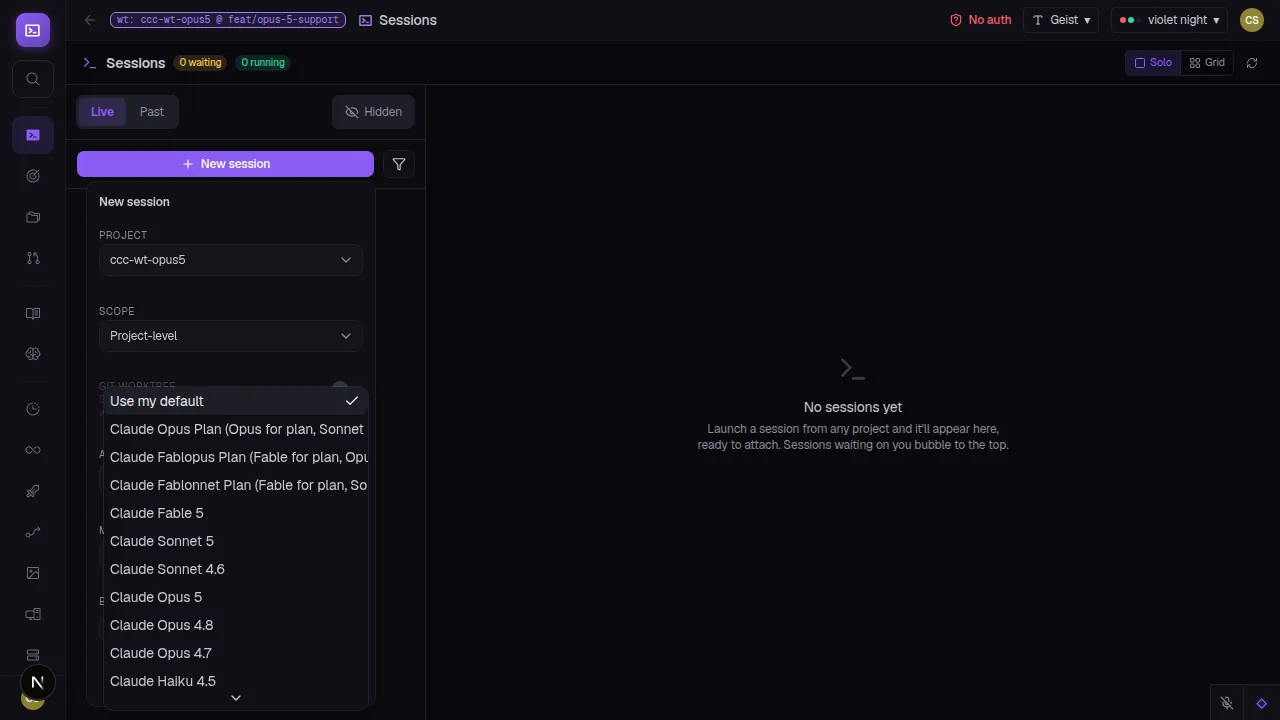
Claude's most capable model, Opus 5, joins CCC's model picker and is promoted across every
autonomous lane in a single sweep: the fablopus preset, Autopilot crew sessions,
BigRalph's implementation model, and the knowledge advisor's findings-generation pass all default
to Opus 5. Same price tier as Opus 4.8 ($5/$25 per Mtok) — cost-neutral. The model resolves through
the existing encrypted key store, so there's no new API surface; every prior model remains
selectable. Opus 5 is simply the new ceiling everything reaches for by default.
02
Distribution
Native Desktop Installers — Win / Mac / Linux
CCC now packages as native desktop apps for all three platforms: an NSIS .exe installer
for Windows, a signed .dmg for macOS, and both an AppImage and a .deb for
Linux. A release CI pipeline builds, signs, and publishes all three artefacts on every tagged release.
A first-run wizard handles Docker dependency prompts and initial project setup — no command line
required to get from download to first session. Operators can now distribute CCC internally as a
standard desktop app rather than a Docker compose bundle.
03
Browser Platform
Secure Browser Engine — Policy Tiers + Chromium Core
The foundation of CCC's browser-automation platform: four policy tiers (T0 Sandboxed →
T3 Full-Control), a min-clamp resolver that enforces the org ceiling before any project
override, and a shared SSRF guard with DNS-pinning to close rebind attacks. On top of that, a real
Chromium instance now launches with every egress funneled through a single decideEgress
chokepoint — enforced by both an in-process forward proxy that resolves and pins the destination IP
before opening a socket, and a Playwright route-level catch-all for service-worker fetches the proxy
can't see. Loopback and cloud-metadata endpoints are protected by a gate no tier or allowlist can
open. Every decision is audited.
04
Pipelines
Full Run Observability — Verdicts, Timelines, Re-run, True Costs
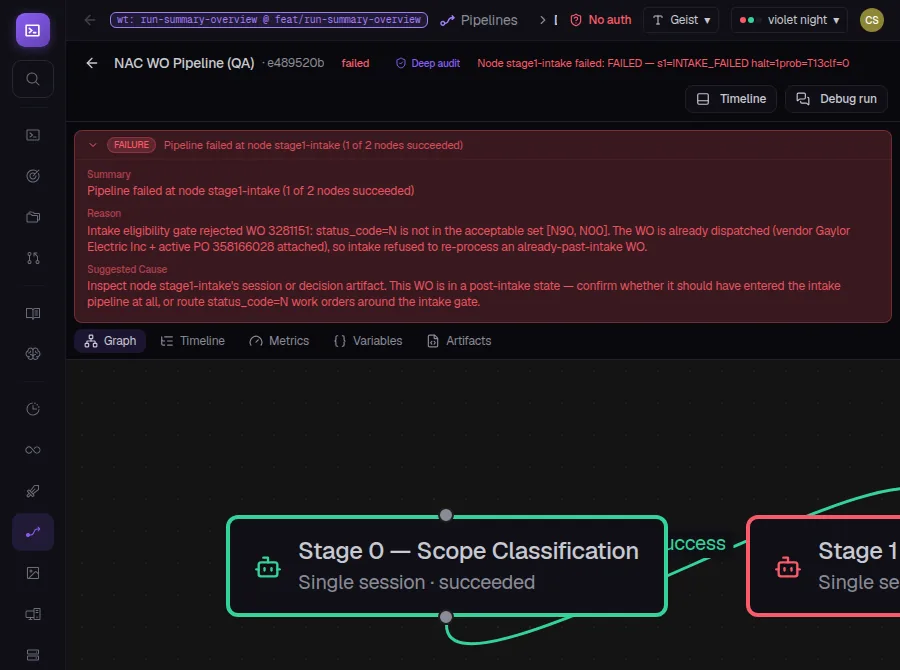
Four gaps closed together across the pipeline run viewer. The analyzer's
Summary · Reason · Suggested Cause verdict is now pinned above the audit tabs —
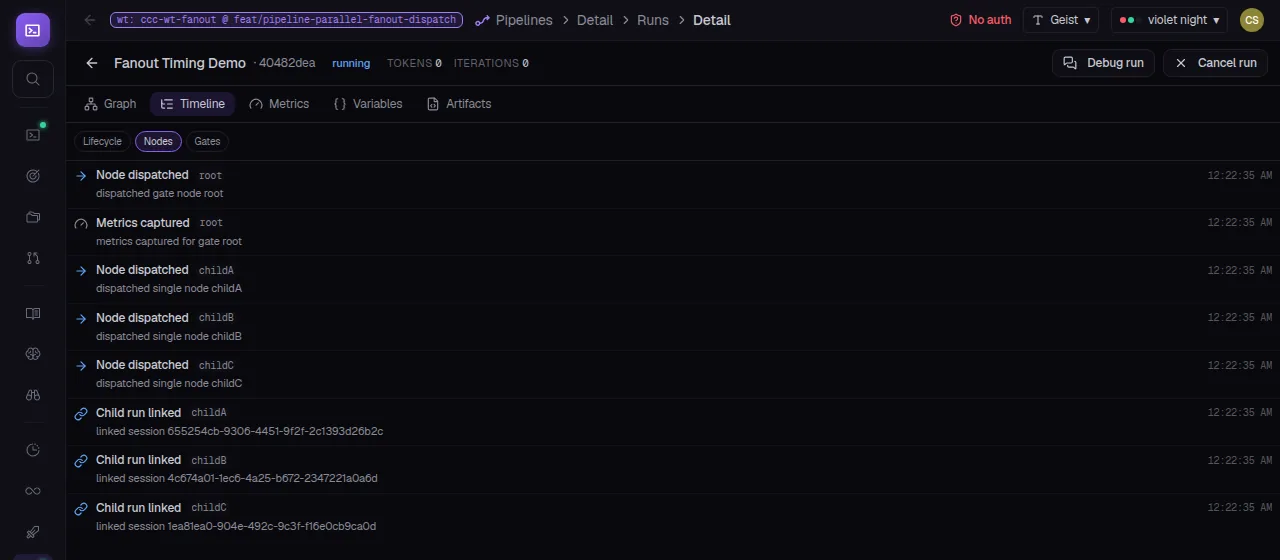
visible on any tab, auto-expanded on failure — instead of hiding in the Timeline header. Every
Timeline event card now expands to reveal the full untruncated failure reason or lazy-fetch the
decision artifact, no debug session required. Any historical run can be
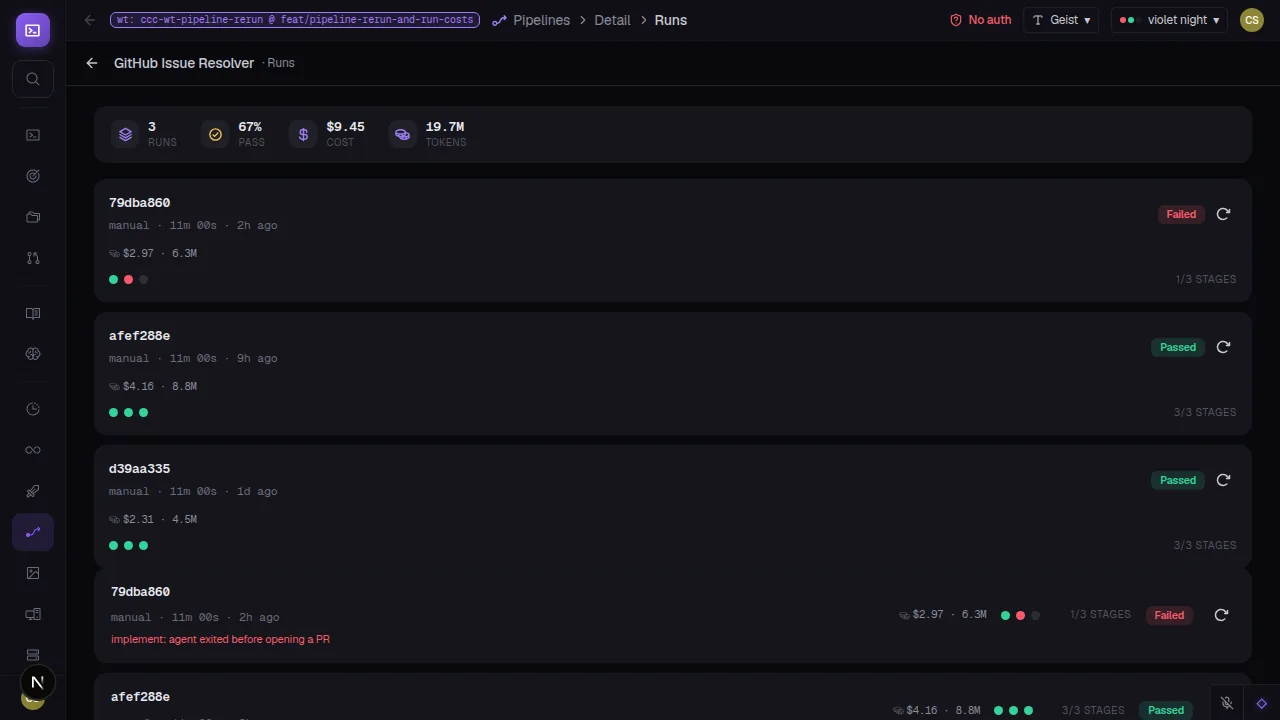
re-run from history with its original parameters. And the runs list now reads cost
from the session_usage ledger — the same ground truth the detail page uses — eliminating
the discrepancy where a run showed one number in the list and another on its own Metrics tab.
05
Models
Quality-Ordered Model Ladder
Agents can now declare a preference ladder instead of a single model ID. An
availability-aware resolver walks the rungs best-to-worst at spawn time — checking key presence,
Ollama readiness, the offline clamp, and the budget cap — skipping any rung it can't reach, and
falling back to a guaranteed local-floor model so resolution never returns nothing. A
bare model-ID string still works unchanged, treated as a 1-rung ladder — no migration required.
06
Integrations
Linear Integration — Binding, Auto-Intents, Comment Sync
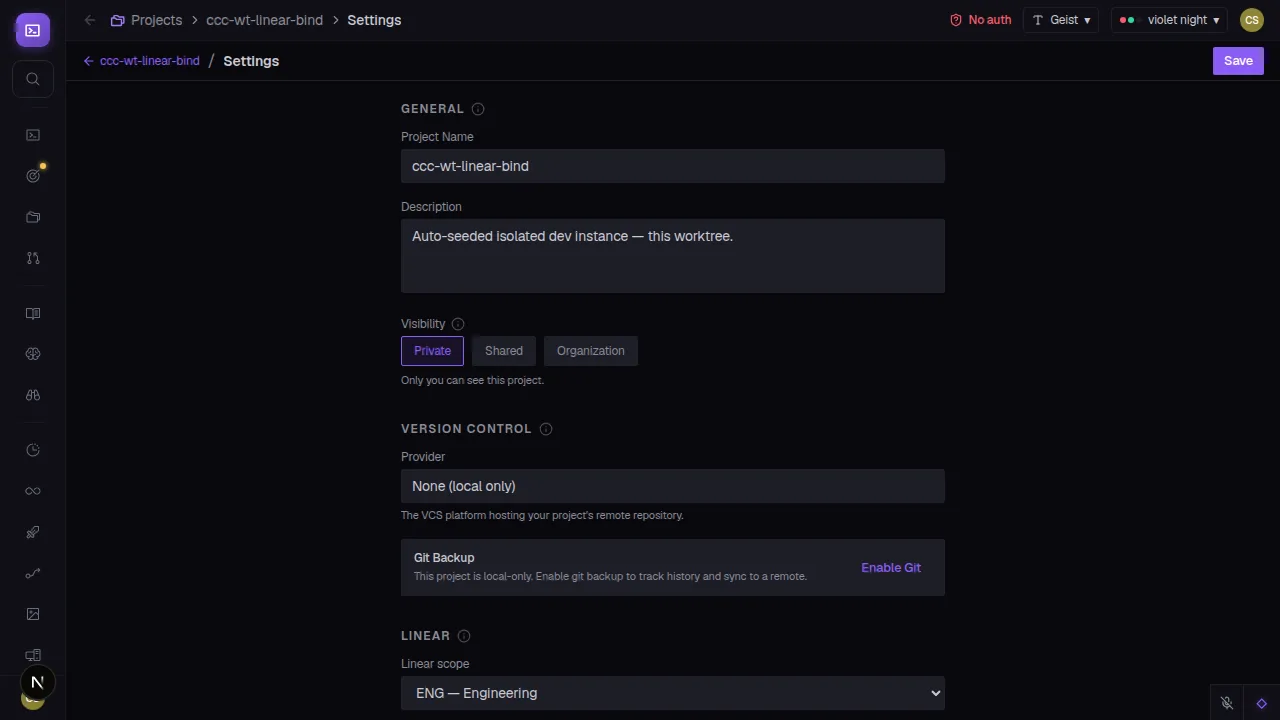
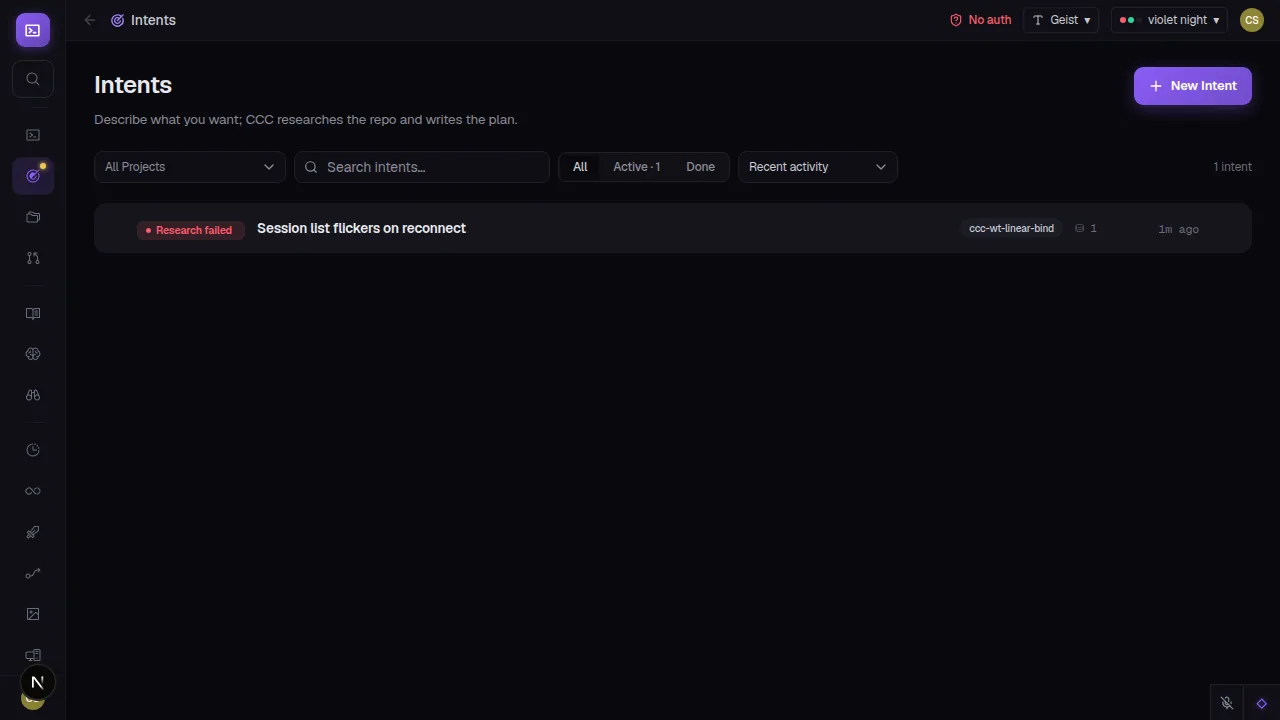
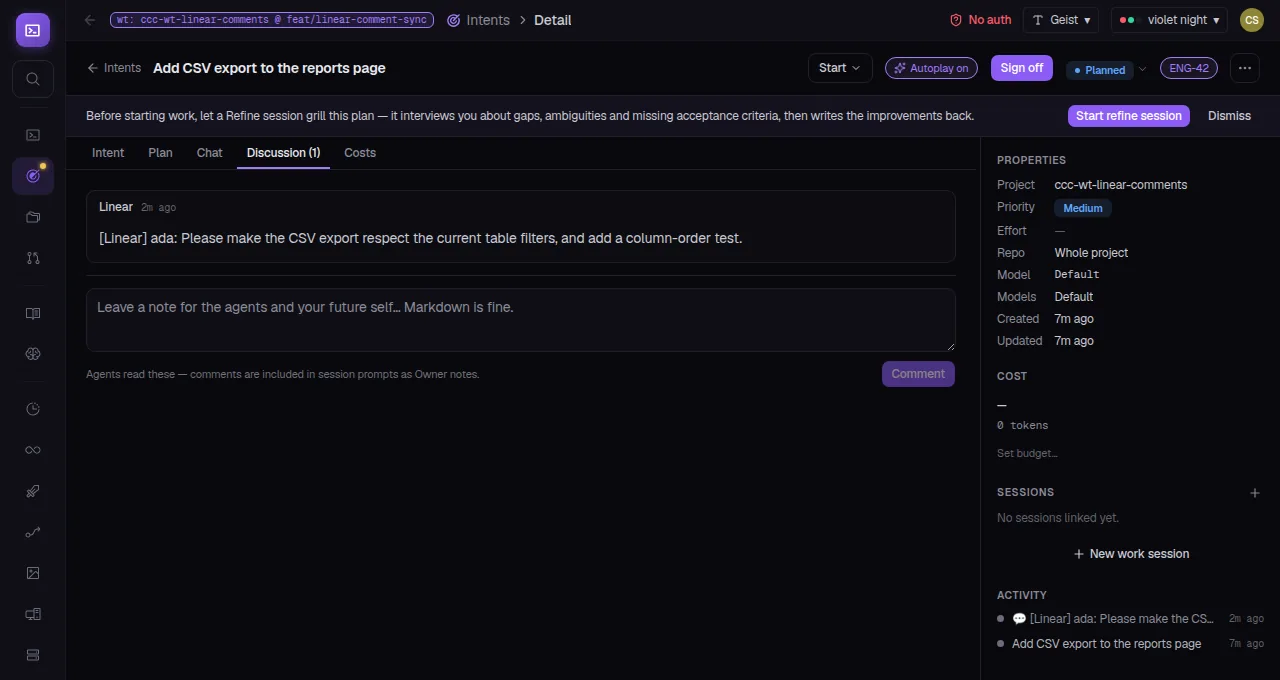
Any CCC project can bind to a Linear team and project scope from Settings. New Linear stories
auto-create matching CCC intents — title, description, priority carried over. CCC posts to Linear as
a registered OAuth app (bot), not a personal API key, so attribution stays clean and
tokens don't expire with user sessions. And comments left on a linked Linear story now flow back into
the intent automatically — a 60-second poller ingests new human comments and folds them into the next
agent session's prompt, with echo prevention so CCC's own mirrored comments never create a loop.
07
Pipelines
GitHub Issue Resolver Flow
A composable pipeline template covering the full GitHub issue lifecycle: ingested from a webhook
trigger, triaged by an agent that classifies severity and assigns labels, implemented by an agent
that opens a pull request, and closed on merge. Each stage is a standard pipeline node, so operators
can fork the template, swap in their own triage logic, or bolt on a code-review agent before the PR
opens. Ships as a managed template in the Pipelines gallery — one click to adopt.
08
Motion Studio
Motion Studio — AE Engine + Remotion CLI
The Motion Studio gains two rendering lanes. An After Effects engine via the
aftr MCP bridge handles premium attended work, with a watchdog that dismisses the modal
dialogs that would otherwise freeze the ExtendScript bridge. And Remotion gets a
dedicated server render lane plus a ccc motion CLI — render,
jobs, cancel, and a brief command that spawns an agent primed
with the render → frame-review → refine loop. Renders land directly in the existing media gallery —
zero new UI surface needed.
09
Intents
Mission Launch from Intent
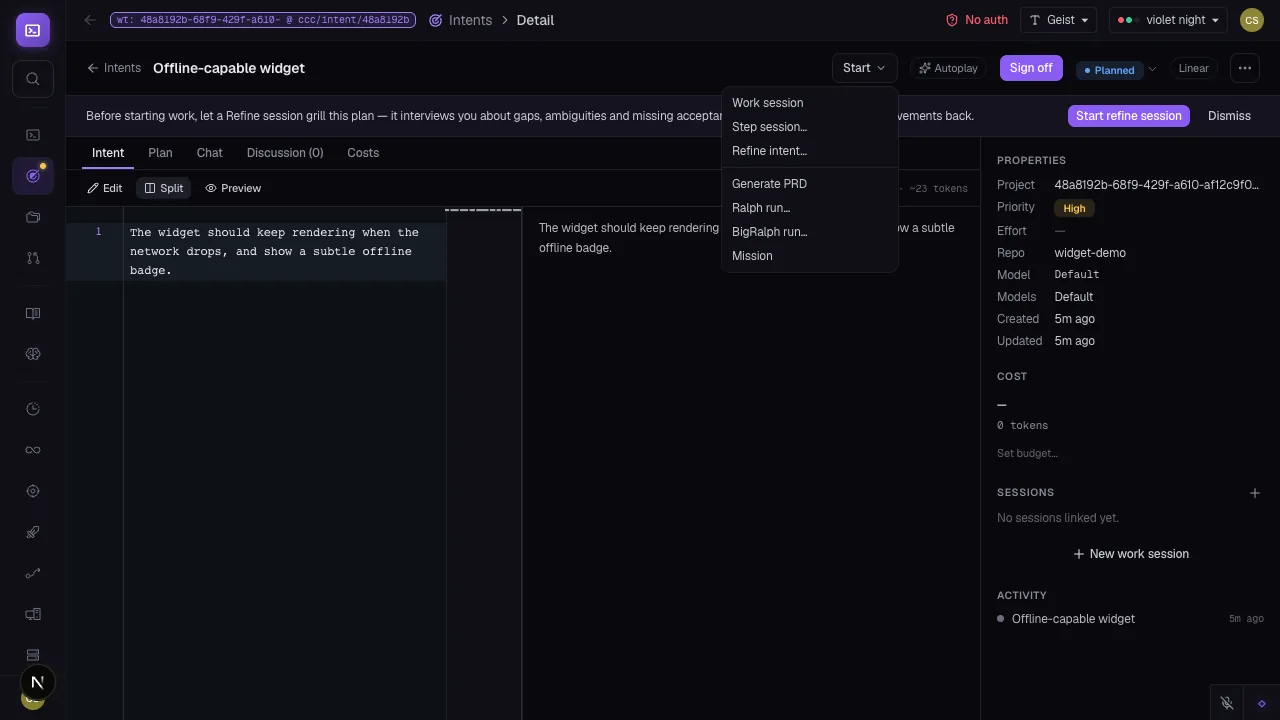
Missions can now be launched directly from an intent's detail page, joining Ralph and BigRalph as the
three peer launch modes. The intent's story card, PRD, research notes, and active plan inject as the
Mission's opening brief — it starts informed, not cold. The Mission page shows an intent chip
back-linking to the originating story; the Intents list shows an active-Mission badge on any intent
that has one running.
10
Mobile · Chat
Chat Overhaul — Multi-select, Mode Chip, Plan Preview
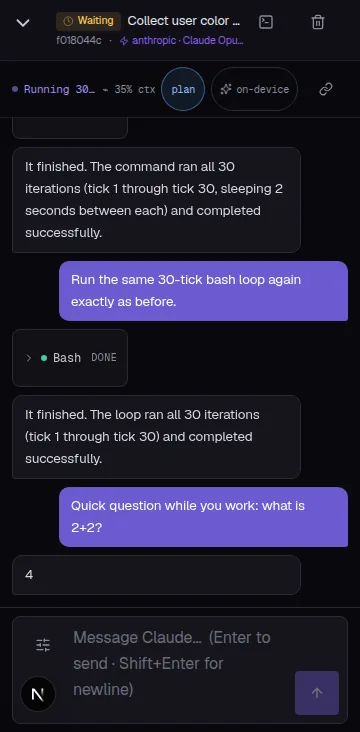
Three fixes to the mobile chat experience, reported straight from the phone. Checkbox-style questions
now render as real checkboxes with a Confirm button instead of a misleading Allow/Deny card. A
tappable chip shows and cycles the session's live permission mode — previously invisible. Mid-turn
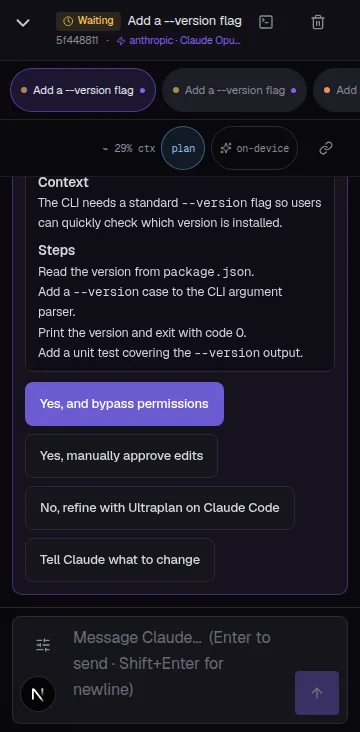
messages now deliver instantly instead of sitting queued until the turn ends. A fourth fix landed the
same week: the plan-approval card now shows the full plan text above the approval
options, instead of asking you to approve something you couldn't read.
 Restart