From five new model providers behind a zero-translation proxy to an intent that drives itself to a merged PR — every piece shipped under test and wired into the ledger.
01
Model Roster
Five New Providers
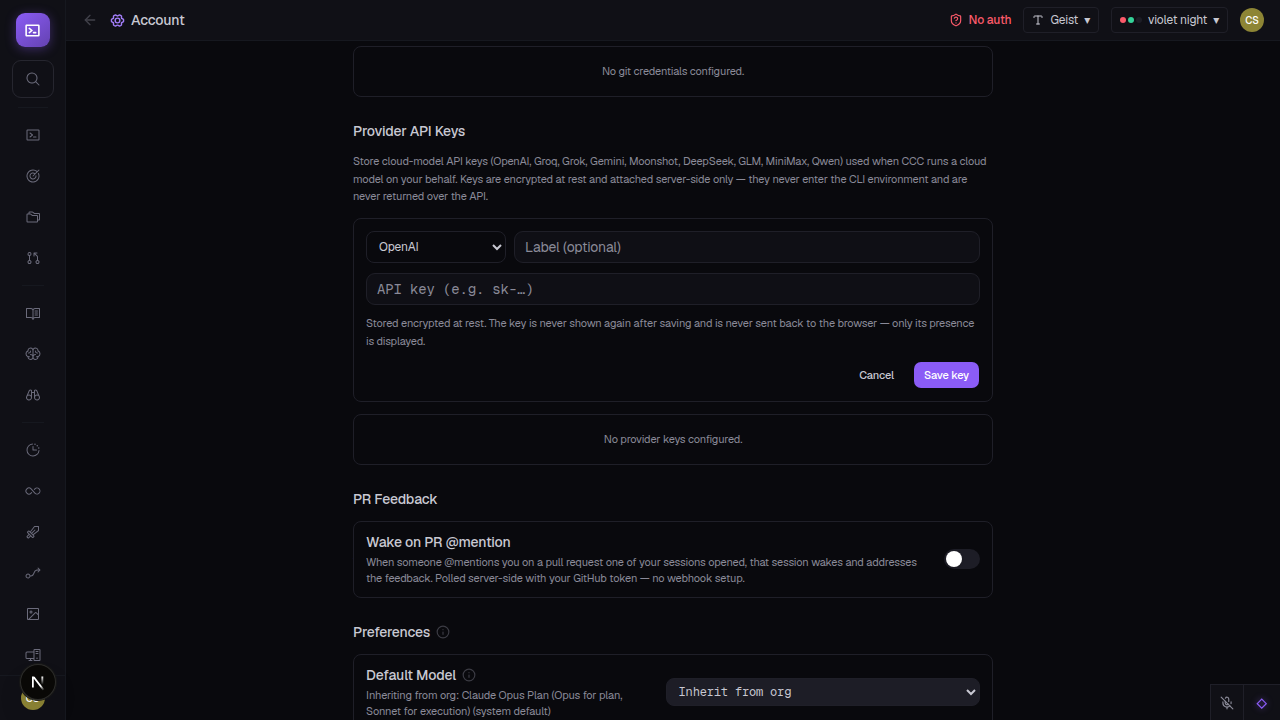
Moonshot/Kimi, DeepSeek, GLM/Zhipu, MiniMax, and Qwen/DashScope join the model picker alongside Claude, GPT, Gemini, and Ollama. All five publish a native Anthropic Messages-compatible endpoint, so they route through a new lightweight passthrough proxy (anthropicproxy.ts) rather than the translation gateway — bytes forwarded as-is, zero schema mismatch. Real API keys resolve server-side from the existing encrypted store; they never enter the PTY child environment. Price-table rows land for all six new model IDs, metered via the existing passive transcript-based usage indexer. Model selection now also populates the size dropdown from the selected model's declared capability set, not a hardcoded list.
02
Backlog Intelligence
Intents v3 — The Living Backlog
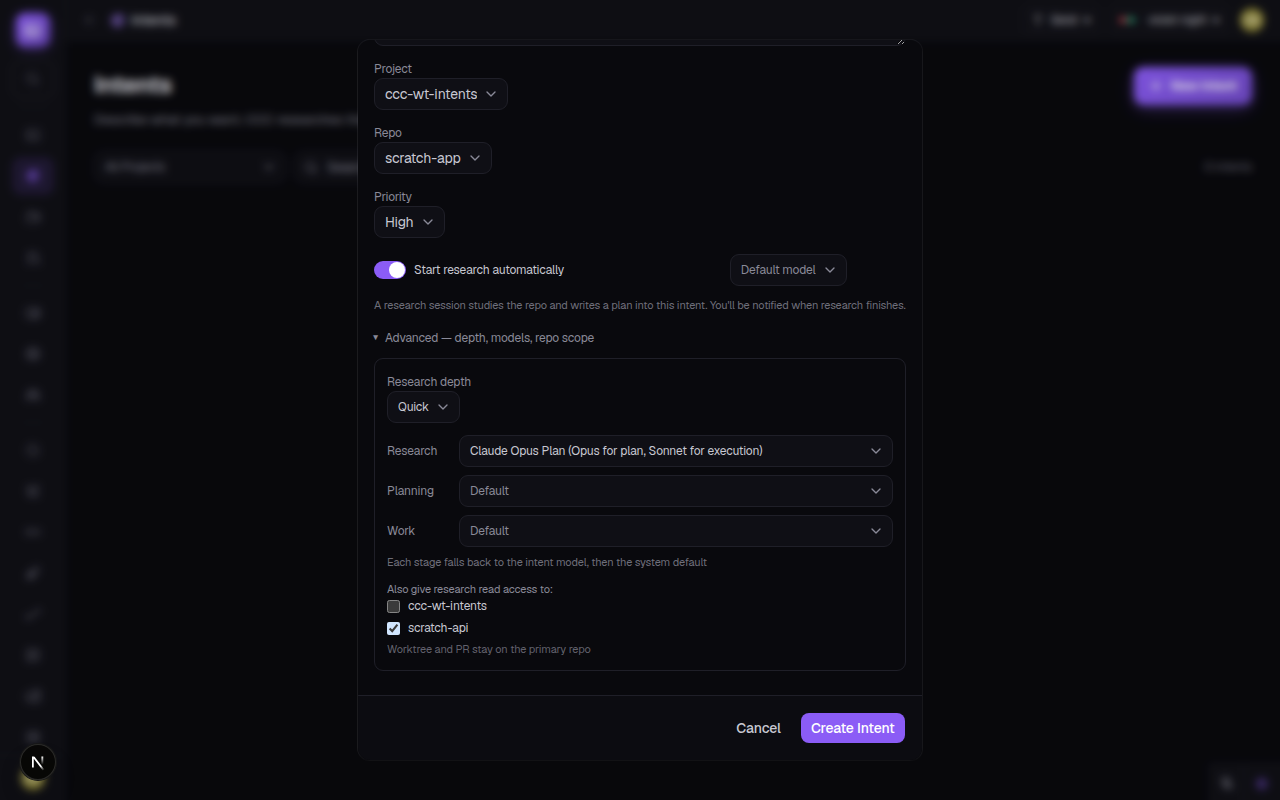
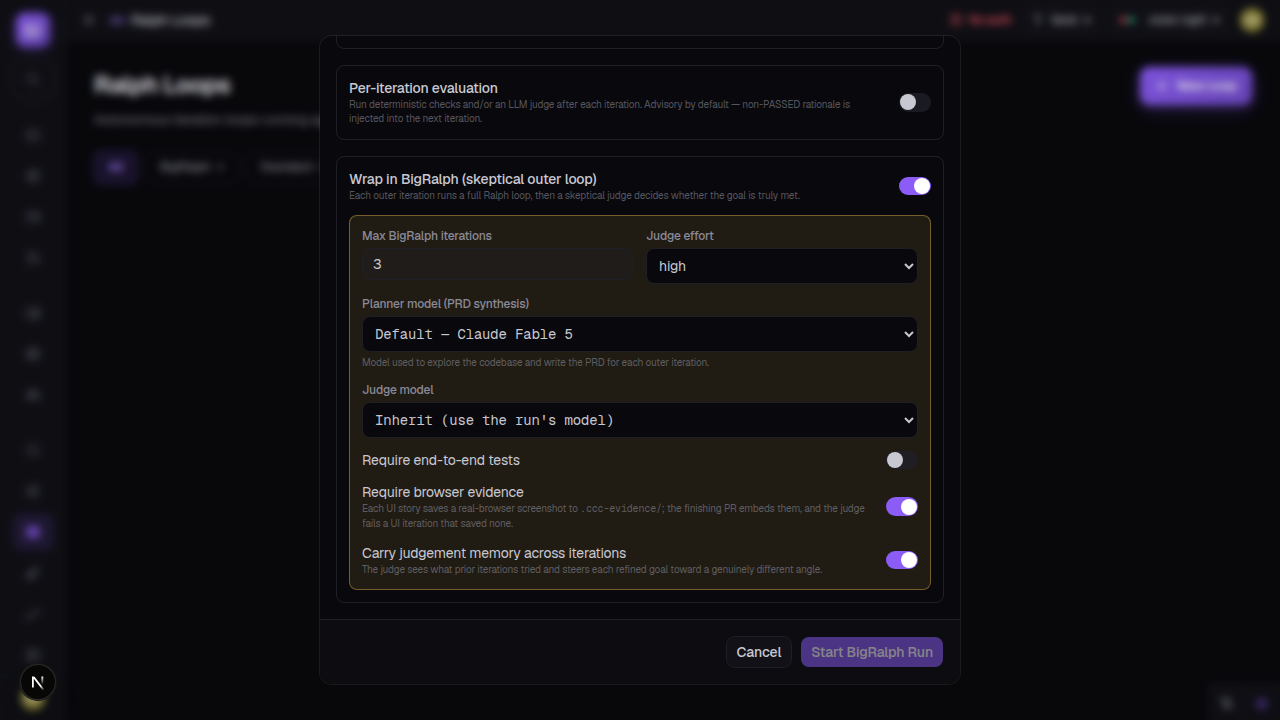
Three increments this cycle. PRD story cards and a PRD-grouped step picker ship first, alongside a persistent Chat tab on every intent. BigRalph launch scope and a per-story cost dashboard (with a force-pass escape hatch) land next, plus sync that writes Ralph/BigRalph run results back into the parent intent as a living plan. The v3 capstone follows: planning model selection, multi-repo research scope, story priority, threaded comments, budget caps, sub-intent scaffolding, and instant PR-merge detection. When the pull request lands, the intent closes itself. Your backlog writes the PRD, assigns the work, tracks costs, and closes the ticket — without touching it again after creation.
03
Autonomous Execution
Intents AI Autoplay
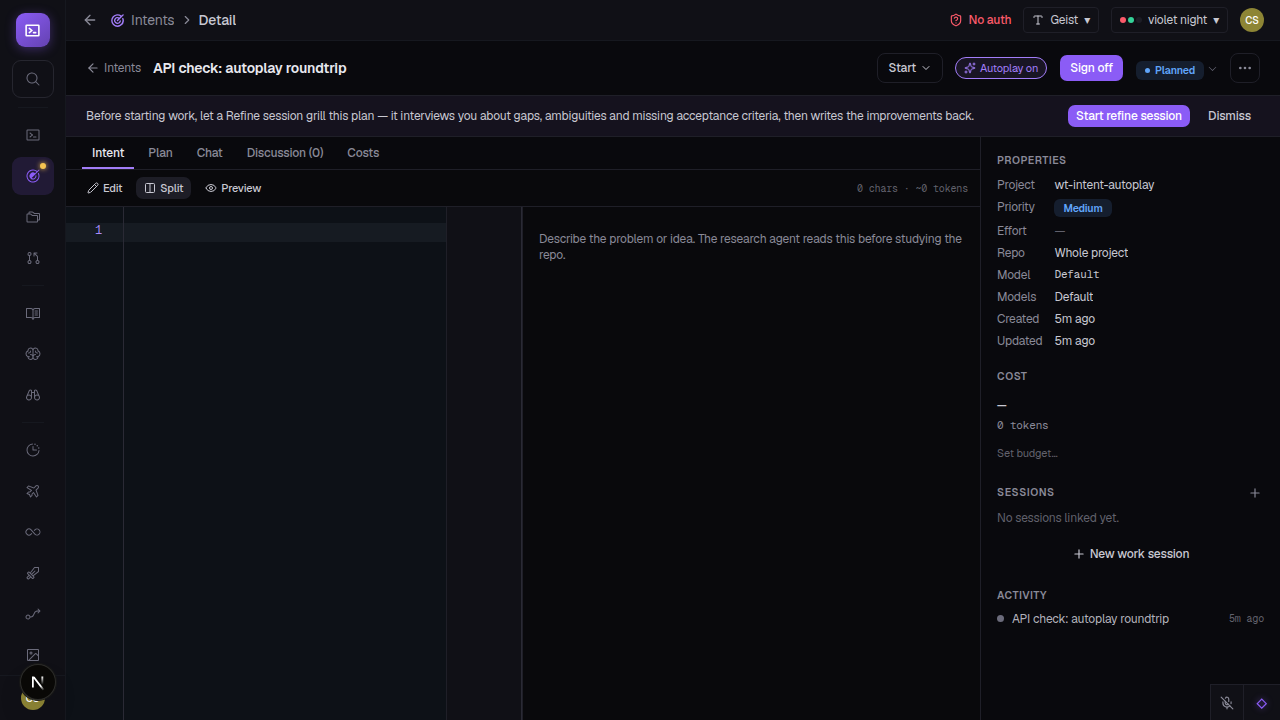
A single toggle on the intent detail page sets CCC running autonomously toward a pull request. Autoplay reads the latest recommended next step — research, plan, implement, or sign-off — and dispatches the right sessions without operator intervention. When autoplay is enabled mid-intent, the last recommendation replays immediately so execution resumes from the correct state. The recommendation banner and recommended-next-step CTA surface inline at every stage, so the operator can override at any point. The result: an intent created at midnight can have a draft PR open by morning.
04
Media Generation
Video / Media Lane
Video generation ships as a first-class lane alongside images. A vid- model prefix routes to the video path; the Images page becomes /media (308 redirect from /images); gallery cards are playable <video> elements; and an image-to-video upload flow lets you animate anything already in the gallery. Pipeline canvas nodes accept vid- models with the same cap and n=1 guarantees — outputs land in the blackboard served as video/mp4. A bounded seconds input and a CLI-shim fallback for IMAGEGEN_VIDEO_MODE=cli handle remote backends. Delivered by a full Ralph run (18 iterations); 2,127 server tests pass.
05
Architecture
Autopilot → Pipelines Gallery
The bespoke Autopilot web UI (~3,000 LOC) is deleted and its capability routed through the Pipelines managed-template gallery. Disable and Run-now controls land directly in the gallery's Use-template dialog. The "Scheduled by Autopilot" badge in the sessions list now links to the gallery — not a dead page. Config-snapshot guard specs were rewritten to drive the guard through the generic adoption route. The result: one UI for all managed pipeline templates, no orphaned nav items, and a tighter code surface to maintain.
06
Mobile
Mobile Chat Enhancements
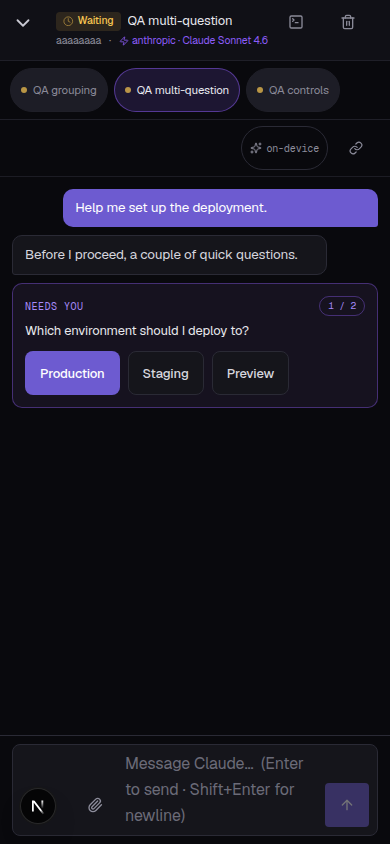
Four refinements to the mobile session chat surface. Multi-question AskUserQuestion prompts now step through every question instead of stalling on Q1 — the root cause (parser emitting only questions[0]) is fixed at the server layer, and the card advances with an N/M chip. Consecutive same-type tool calls are grouped so the feed stays readable. Mode and effort can be changed directly from the chat composer. Message queuing no longer strands mid-session sends. Composer overflow, dropdown z-index, and the Intents Chat tab also fix on mobile.
07
Chat UX
Chat UI Refinements
The desktop chat composer gains multi-select question cards with individual option chips, a plan preview that renders the model's current plan inline before execution, a permission-mode chip that shows the active mode at a glance, and immediate mid-turn sends — so you can inject a correction without waiting for the current block to complete. A stale claude_conversation_id bug that blanked the chat view after an in-TUI /resume is fixed at the root. Session-token signing now uses the user_sessions row ID rather than the PTY ID, eliminating a class of auth edge cases.
08
Developer Tools
Agent & Skill Export
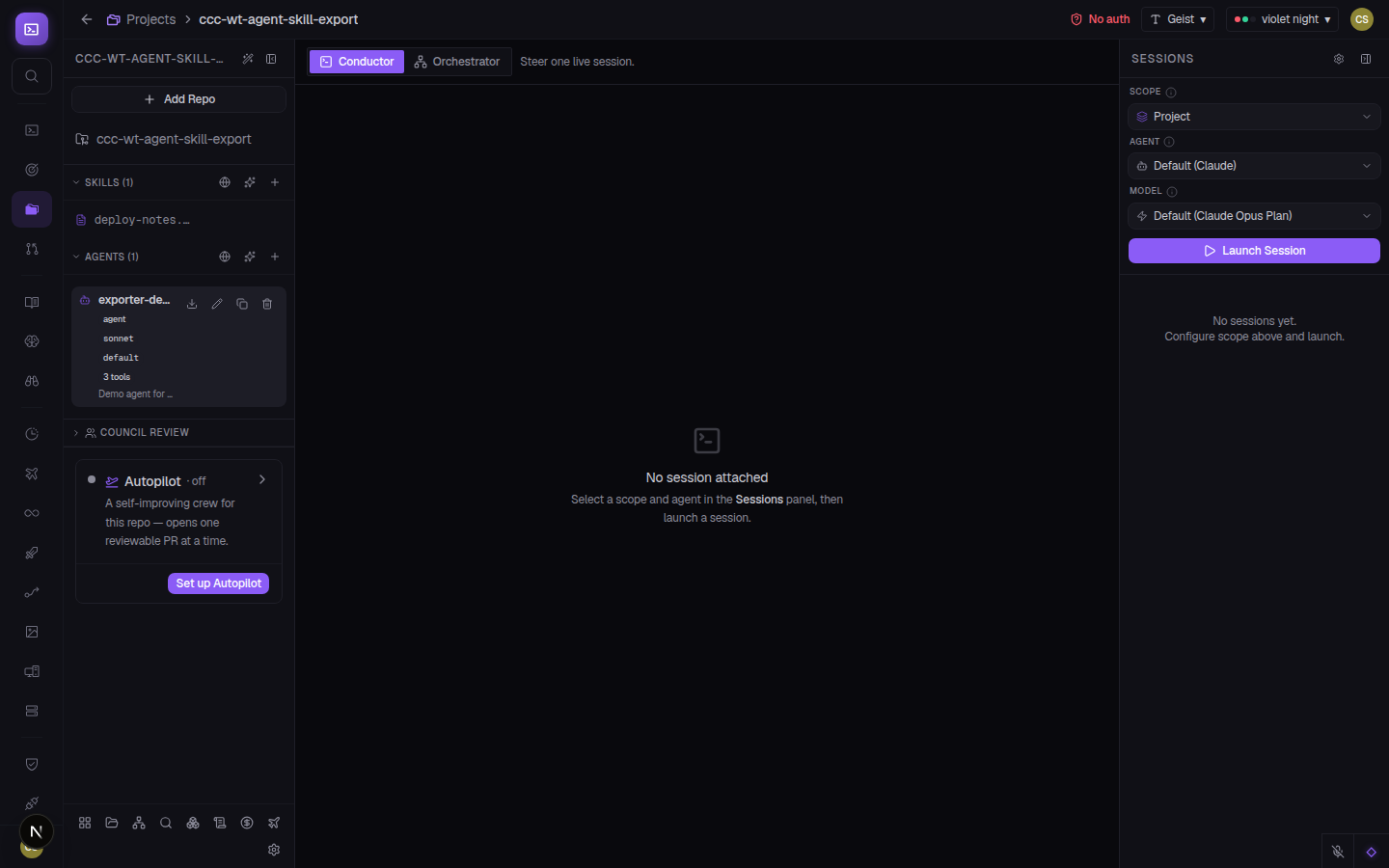
Every agent and skill row in the project view gains a Download button. Agent export produces a single compiled .md — agent metadata, all settings (model, permissionMode, tools, effort, isolation, hooks), the full system prompt, and the full content of every referenced skill inlined as ## Skill: sections. Built-in, org, and project skills all resolve; missing skills are noted rather than silently dropped. Skill export is pure client-side — no server round-trip. The endpoint respects project, org, and repo scope, and streams text/markdown with a Content-Disposition: attachment header.
09
Integrations
Linear Story Parity
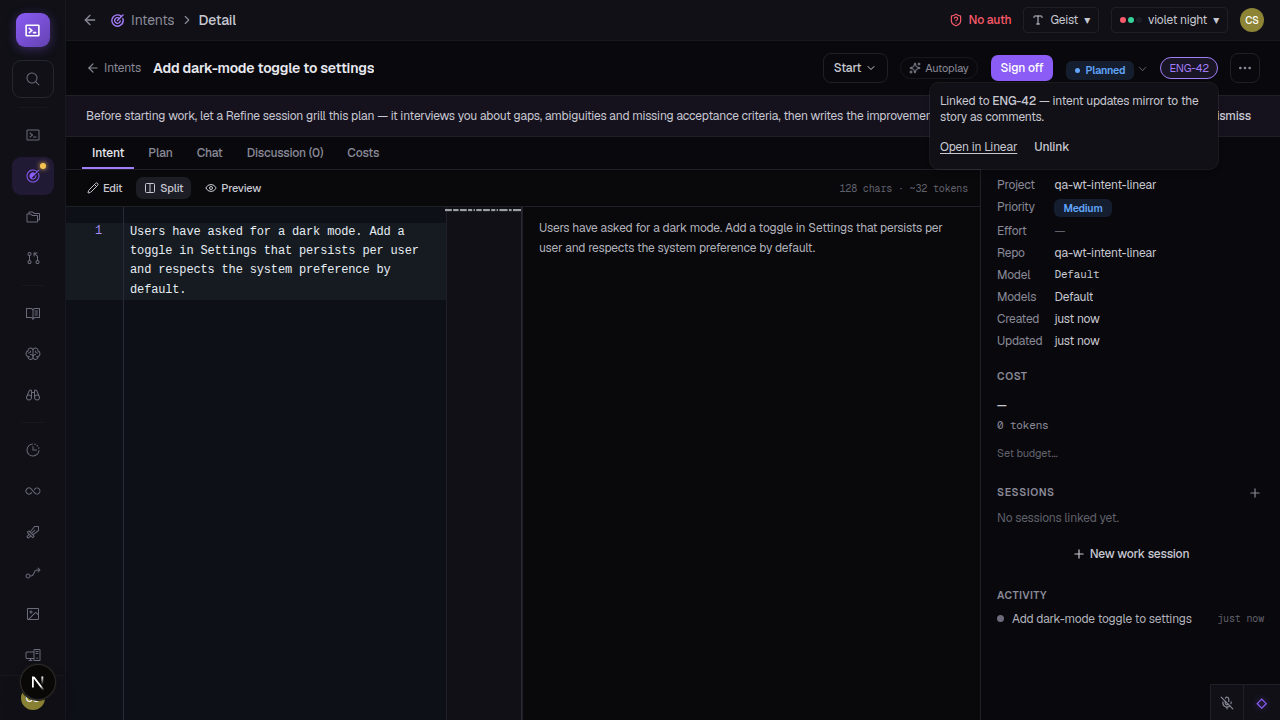
CCC Intents now interoperate with Linear. You can adopt an existing Linear issue as a CCC intent (pulling in its title, description, and priority), create a new Linear story directly from the intent panel, and mirror status updates back — so your Linear board reflects what CCC is actually doing without manual sync. A chip popover on the intent detail shows the linked Linear issue, its state, and a direct link. Org-level Linear API key configuration lands in Settings, and the ccc CLI's sessions command now injects the full command inventory into every session's context automatically.