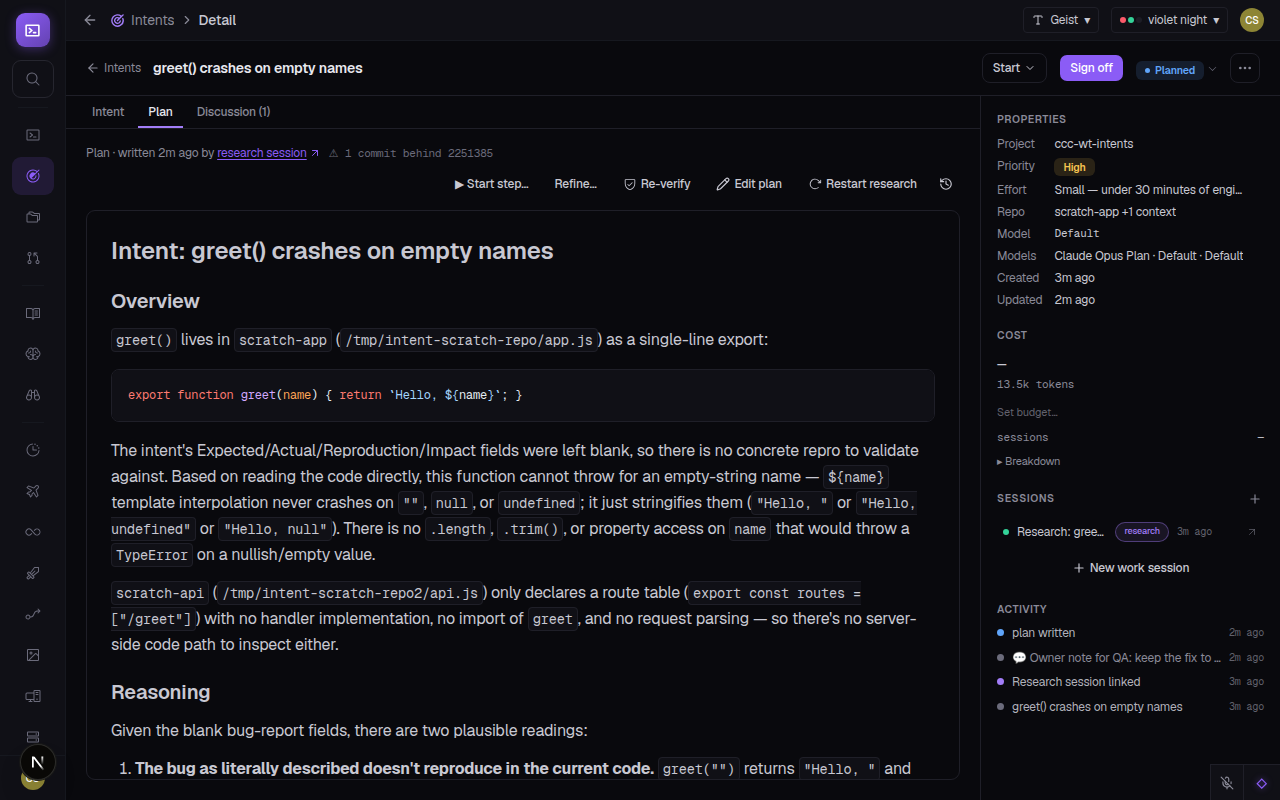
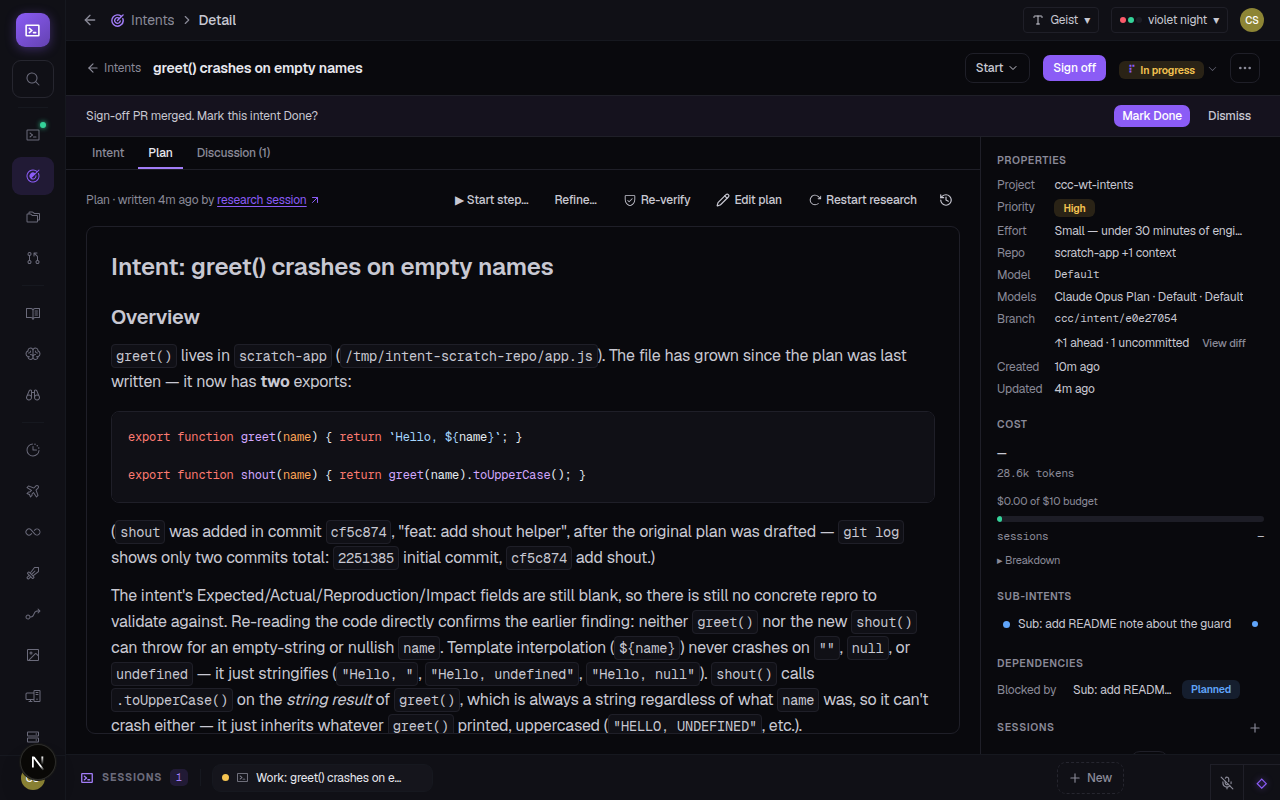
From a cloud identity layer that spans orgs to a backlog that tracks its own stories, every piece landed behind test, wired into the ledger, and ready for production.
01
Backlog Intelligence
The Intents System
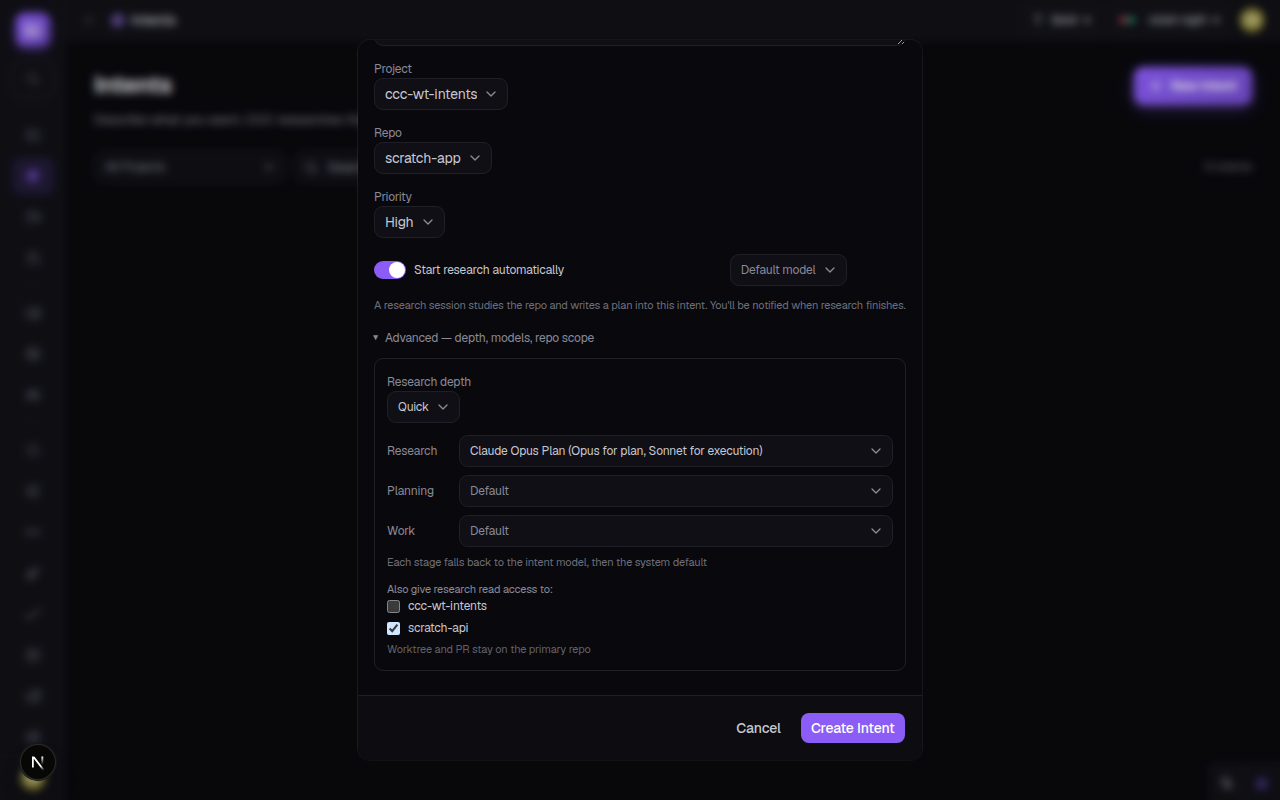
Three increments, one week. Start with Linear-style stories that auto-research, track session history, and roll up costs. Add purpose-sessions, Ralph and BigRalph orchestration, and a sign-off-to-PR pipeline. Land at v3: planning models, multi-repo research, story priority, threaded comments, budget tracking, sub-intents, and instant PR-merge detection. Your backlog writes itself, executes itself, and closes its own tickets.
02
Media Generation
Video / Media Lane
Video generation ships as a first-class lane alongside images. A vid- model prefix routes to the video path; the Images page becomes /media (308 redirect from /images); gallery cards are playable <video> elements; and an image-to-video upload flow lets you animate anything already in your gallery. Pipeline nodes accept vid- models with the same cap and n=1 guarantees — outputs land in the blackboard served as video/mp4. 2,127 server tests pass. The cloud provider seam is documented; local-only for v1.
03
Orchestration
Missions — All Four Parts
Missions landed across four increments this cycle. P1 ships the orchestrator-driven goal executor. P2 adds a judge layer, spend budgets, heartbeat checks, and session handoff. P3 tightens the steering surface — in-flight chat, live plan edits, pause/resume, and concurrent agent dispatch. P4 wires Missions into triggers and pipelines. A fifth PR rounds it off with a conversational mission-start dialog backed by a planning-mode orchestrator, so the goal drives the plan rather than the other way around.
04
Infrastructure
Cloud Backend (codecc.ai)
The multi-tenant cloud layer that will power codecc.ai shipped across eight increments: Supabase identity schema and RLS, control-plane config and DEK escrow, entitlements and billing seed data, Edge Functions for device-link and session-handoff flows, org management with seat-gated invites and last-owner invariant, a JWKS verifier with offline disk cache, five cloud-sync repositories, and the full signup / device-link / invite / OAuth web flow. The seam is drawn; the schema is locked; the auth layer is live.
05
Wearable
G2 Voice Control
The Even Realities G2 HUD gains a full voice stack in three increments. Increment 2a streams any CCC session to the lens display. 2b adds cloud Whisper transcription + live translation — continuous mic to English captions on-lens, offline-clamped and metered. 2c ships a wake-word Voice Command mode: speak a command, the intent grammar resolves it (or Claude prompts for it), and CCC executes.
06
Chat UX
Session Chat Overhaul
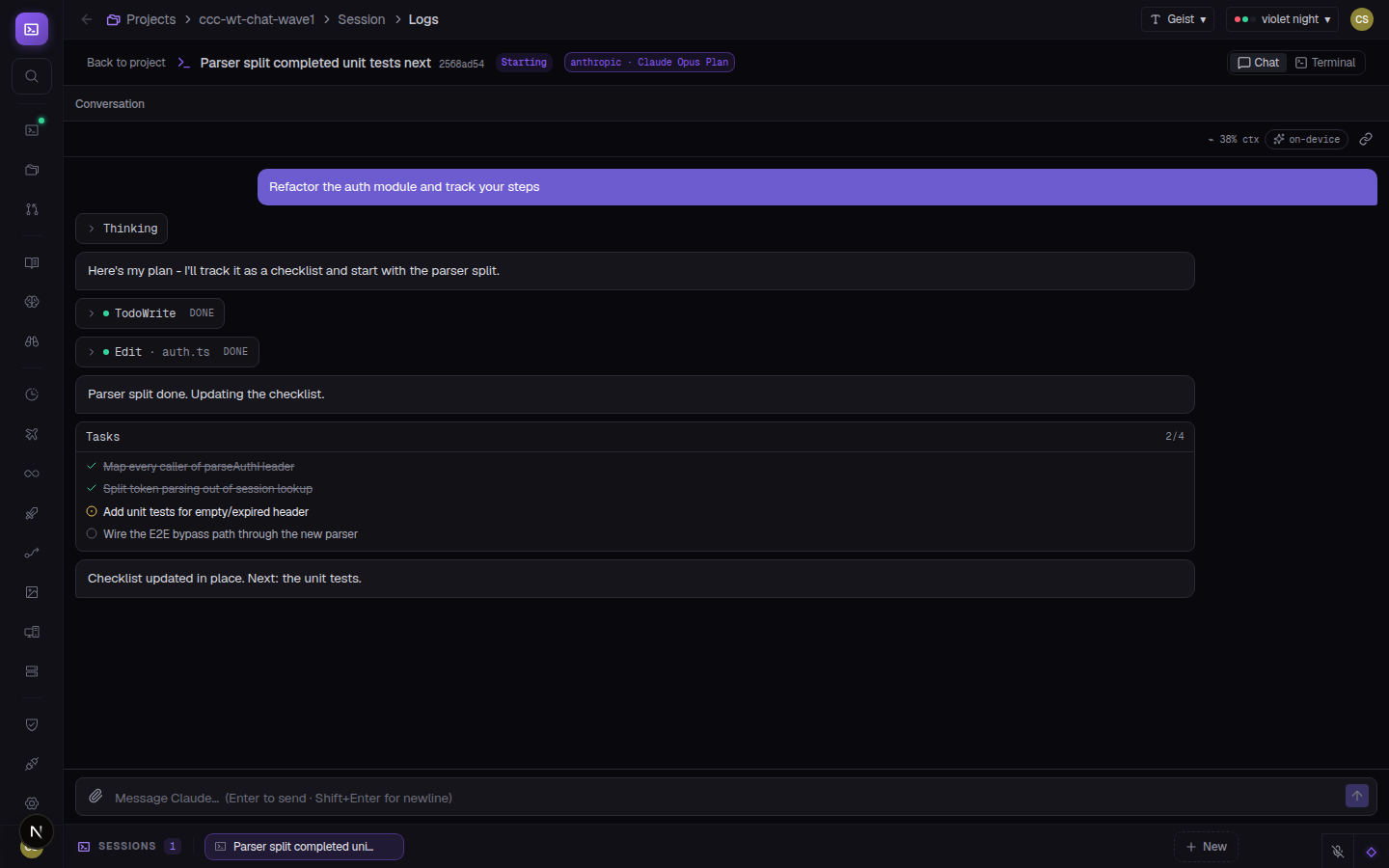
Eight PRs remade the chat surface from the ground up. The composer gains drag-drop and paste. Queued messages echo optimistically. Thinking cards, live todo checklists, edit-diff cards, and a context/cost chip render Claude's work as it happens. The slash-command menu lands in the composer. /btw opens a transcript-grounded side channel for questions without breaking the session. /resume shows a conversation picker. Bash commands surface risk annotations. Tables and headings render correctly. Drafts persist.
07
Safety
Session Guardrails
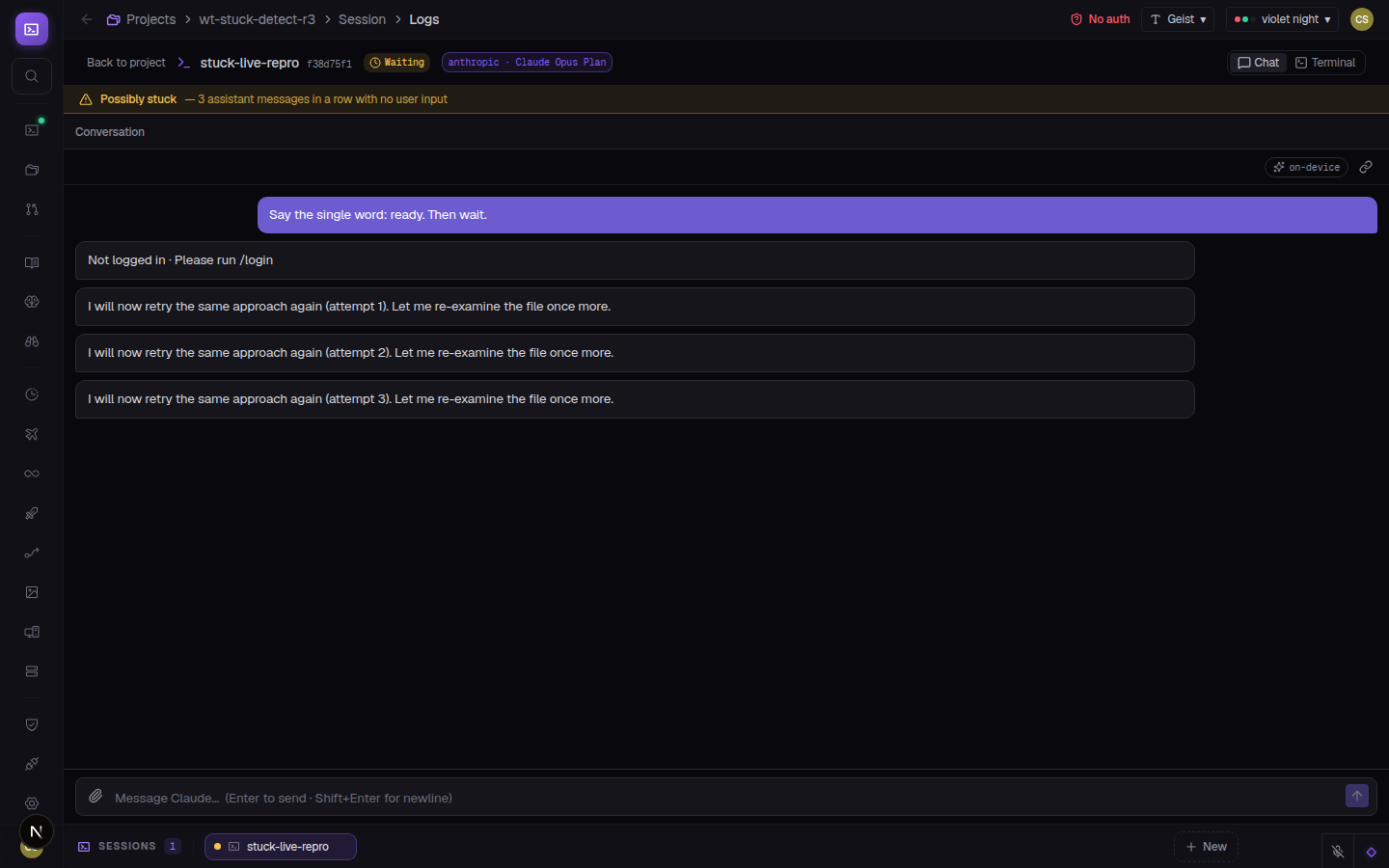
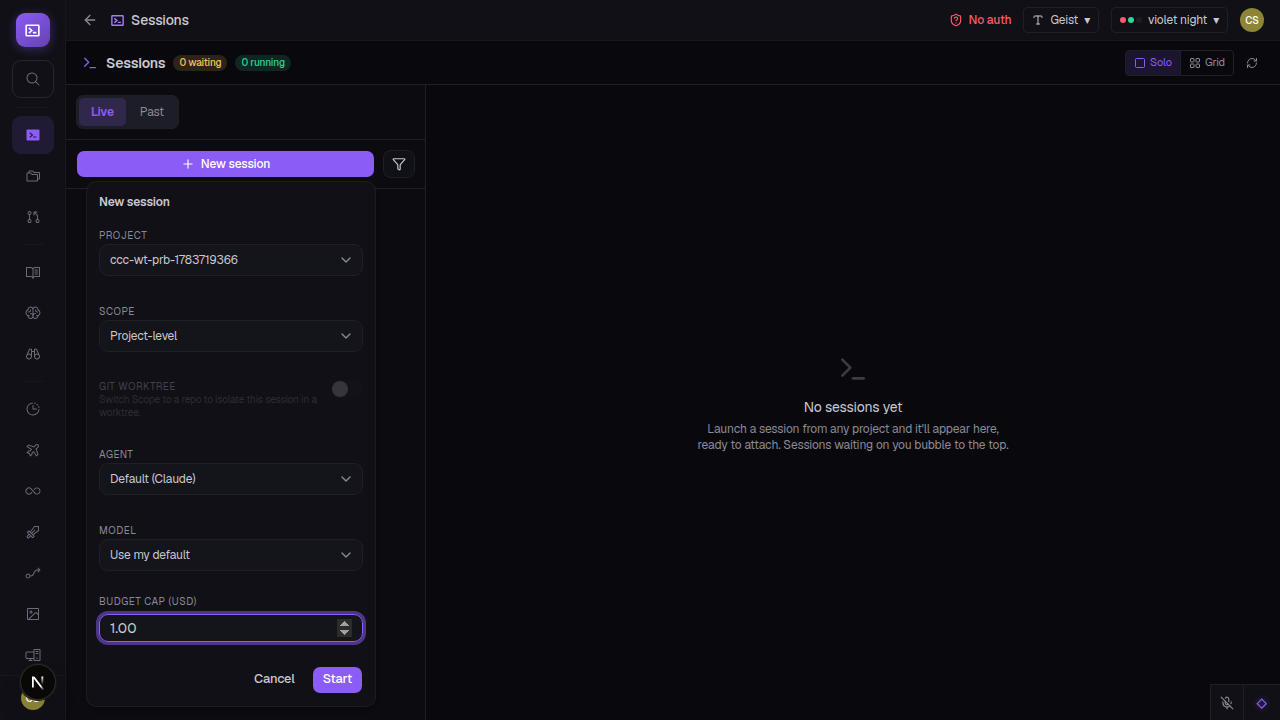
Two guardrail layers ship together. Stuck and loop detection watches every session in real time — when a session spins, a banner and badge fire immediately without auto-killing. Opt-in spend caps let operators set a per-session token budget at spawn time; automations that would exceed the org rate limit are held back and rescheduled automatically. Both layers compose: a stuck session that's also over budget gets both signals.
08
Image Generation
Image Gen — Production Polish
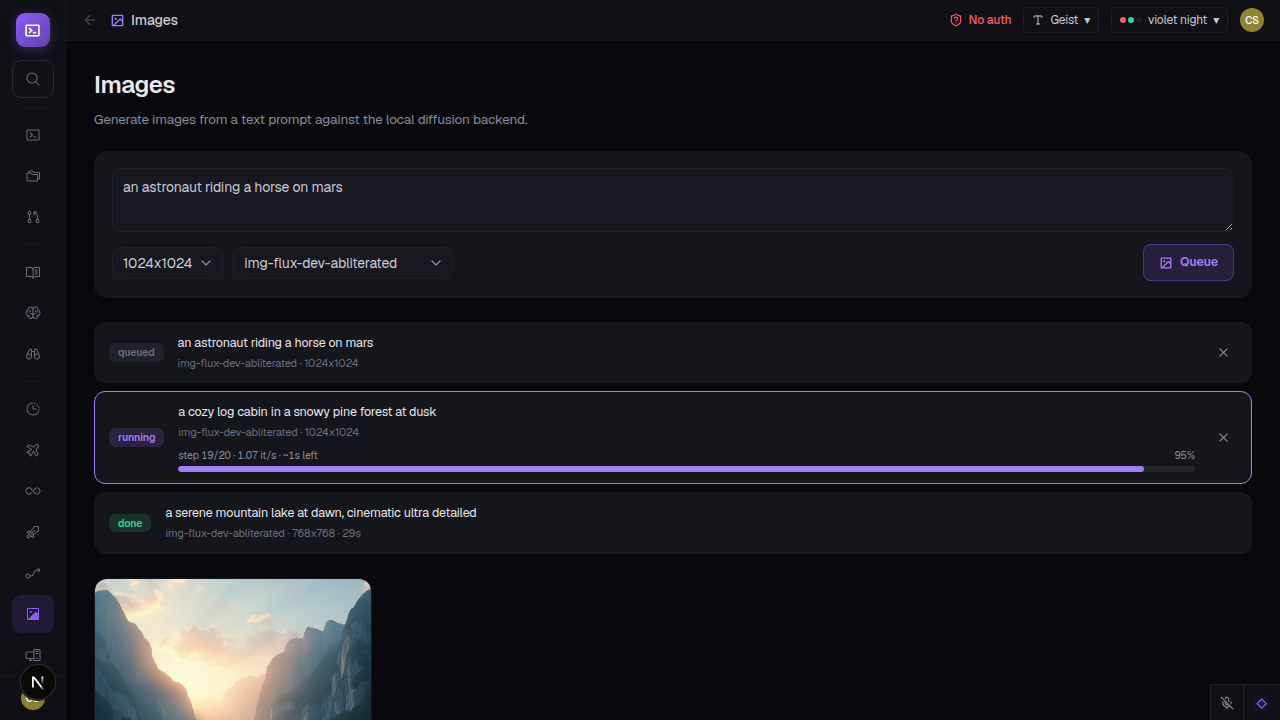
The local FLUX / ERNIE image backend gains a job queue with live progress, cancel, and a blank-image guard that retries rather than serving a white card. Per-user visibility lets each user hide or permanently delete their own images. The size dropdown now populates from the selected model's declared sizes instead of a hardcoded list. The IMAGEGEN_BASE_URL env gate keeps the page hidden until a backend is actually configured.
09
Visual DAG
Pipeline Canvas
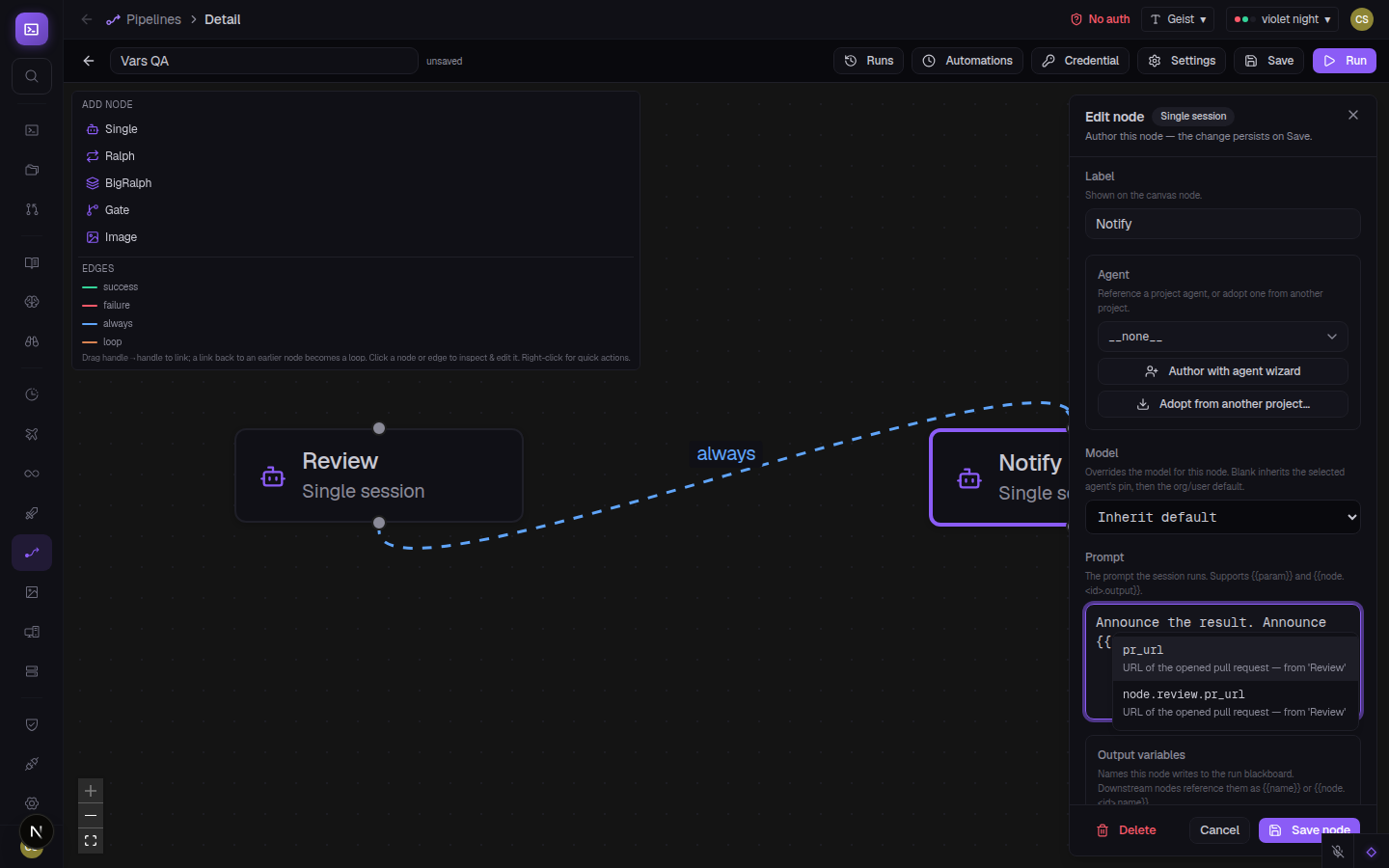
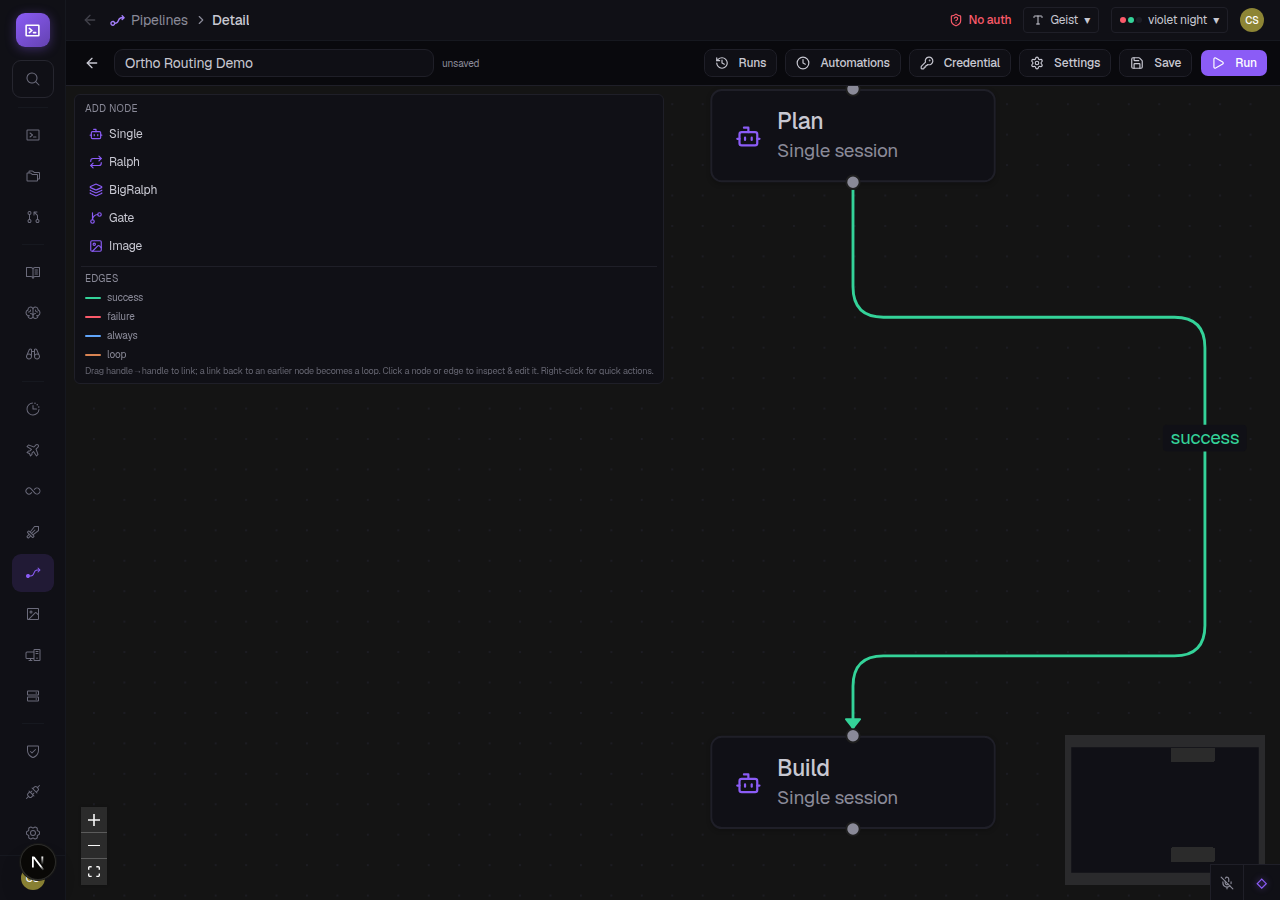
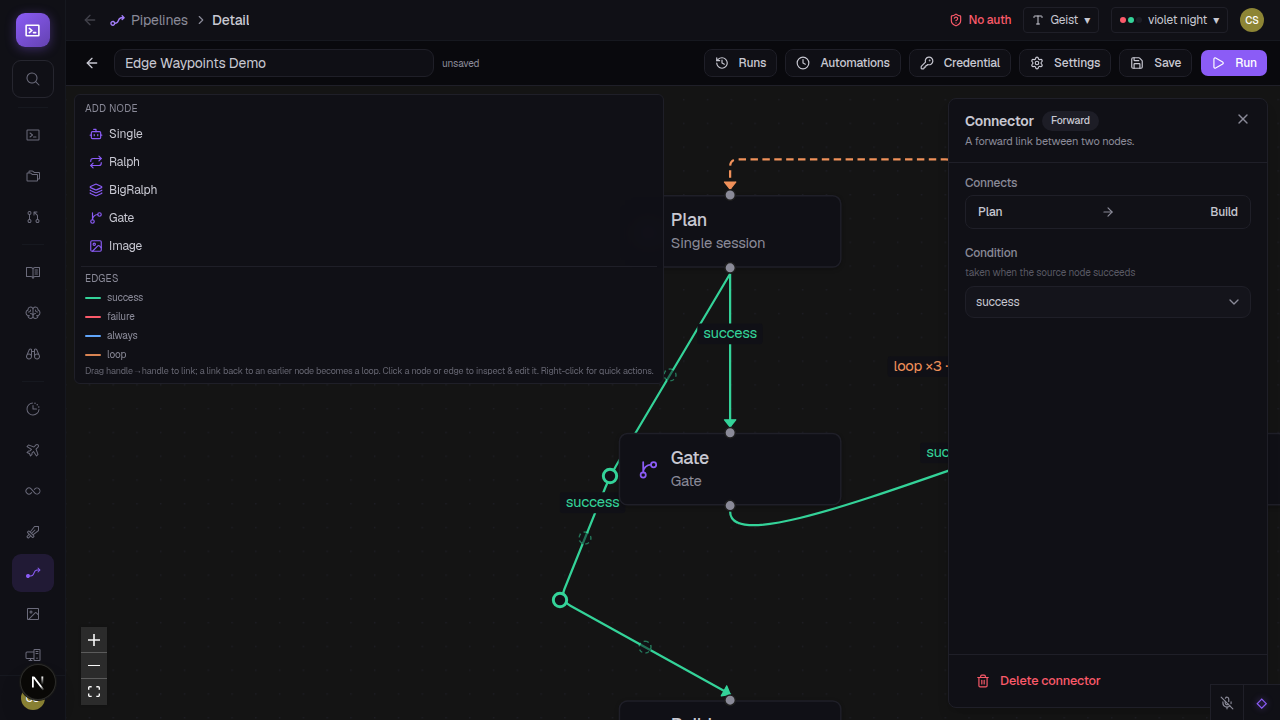
Four improvements landed on the pipeline canvas. Connectors now snap to 90°-locked orthogonal routing by default. Draggable bend points let you reshape any connector by grabbing it — persisted to the backend. BigRalph plan and impl models are now configurable per node via the inspector. And pipeline variables ship with editor autocomplete, inline warnings, run-dialog prompting, and e2e coverage — so the same pipeline can run against dev, staging, and prod without edits.