Code Command Center got a voice this cycle — an Assistant Gateway that embeds CCC in any web app, chat-first sessions, a mobile command center, project collaboration, and per-project cost visibility that finally answers "what did this run cost?" Here's what left the launchpad.
Each one ships behind a real merged PR, wired into the live system. Together they turn CCC from a solo tool into a collaborative, conversational, cost-visible command center.
CCC becomes a team sport. Four-part series: an editor role that writes real project config, concurrent-edit safety that prevents config overwrites under race conditions, auto-merge + sync health that keeps snapshot repos from silently diverging, and a getting-started surface that orients new project members on arrival.
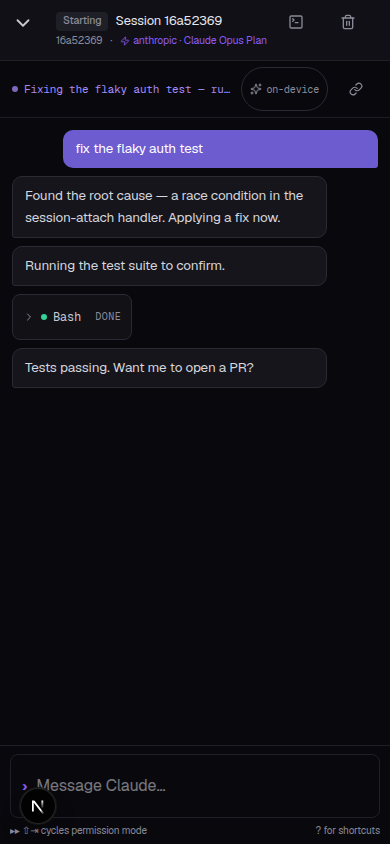
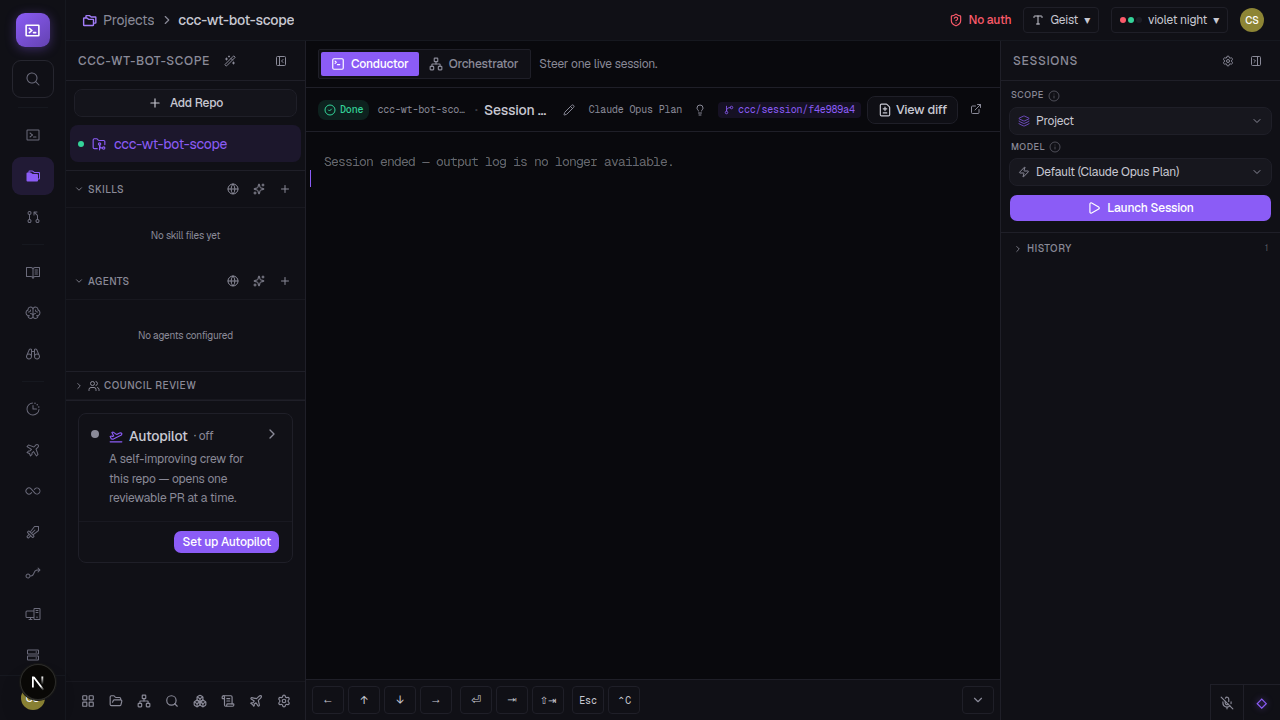
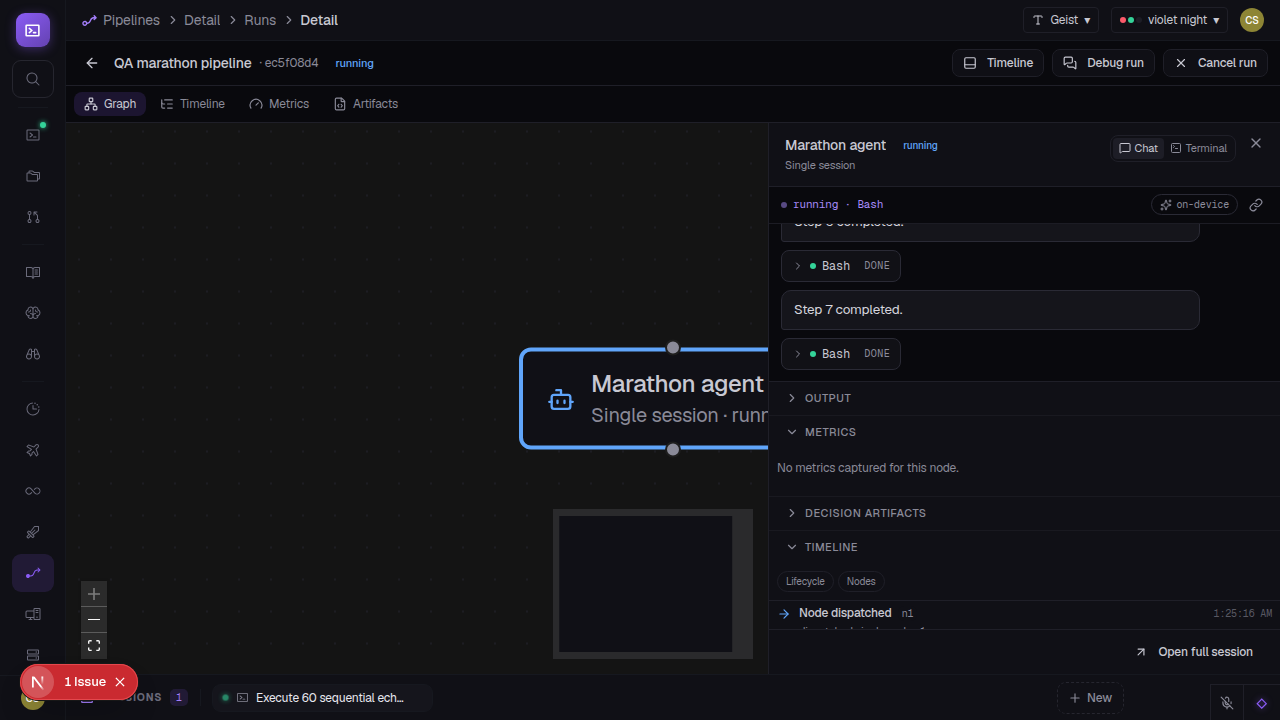
Pipeline node terminals now default to a chat view — Claude Code's tool calls, permission prompts, and outputs rendered in a readable conversation layout. Switch to raw terminal any time. Also ships richer Claude Code hook signals surfaced inline, and replay-safe PTY scrollback that doesn't drift on reconnect.
A complete chat-first mobile experience — P0 through P2 complete. Open any session on your phone and get a readable conversation view, not a raw terminal. The governing chatbot routes your question to the right agent and brings the answer back in plain language.
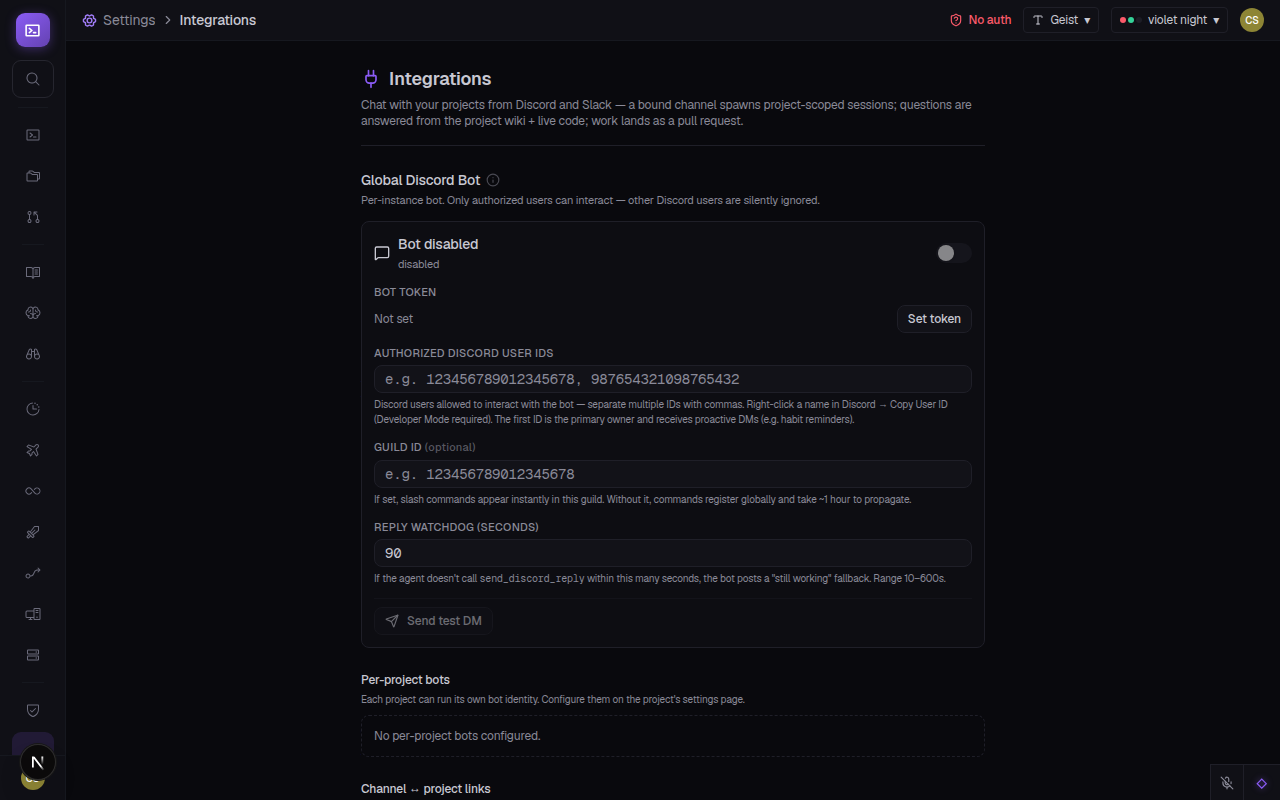
Discord and Slack config now live under a single /settings/integrations page — channel links, access mapping, and connection status in one place. Slack gains /ccc-provision, project-channel notifications, and ccc slack post. Discord gains CLI-linkable channel binding with ccc discord link.
Every bot now understands the project it's installed in. Bots can open worktrees, submit pull requests, answer questions grounded in the project wiki, and carry per-project chat identities — so your Slack bot sounds like itself, not a generic assistant.
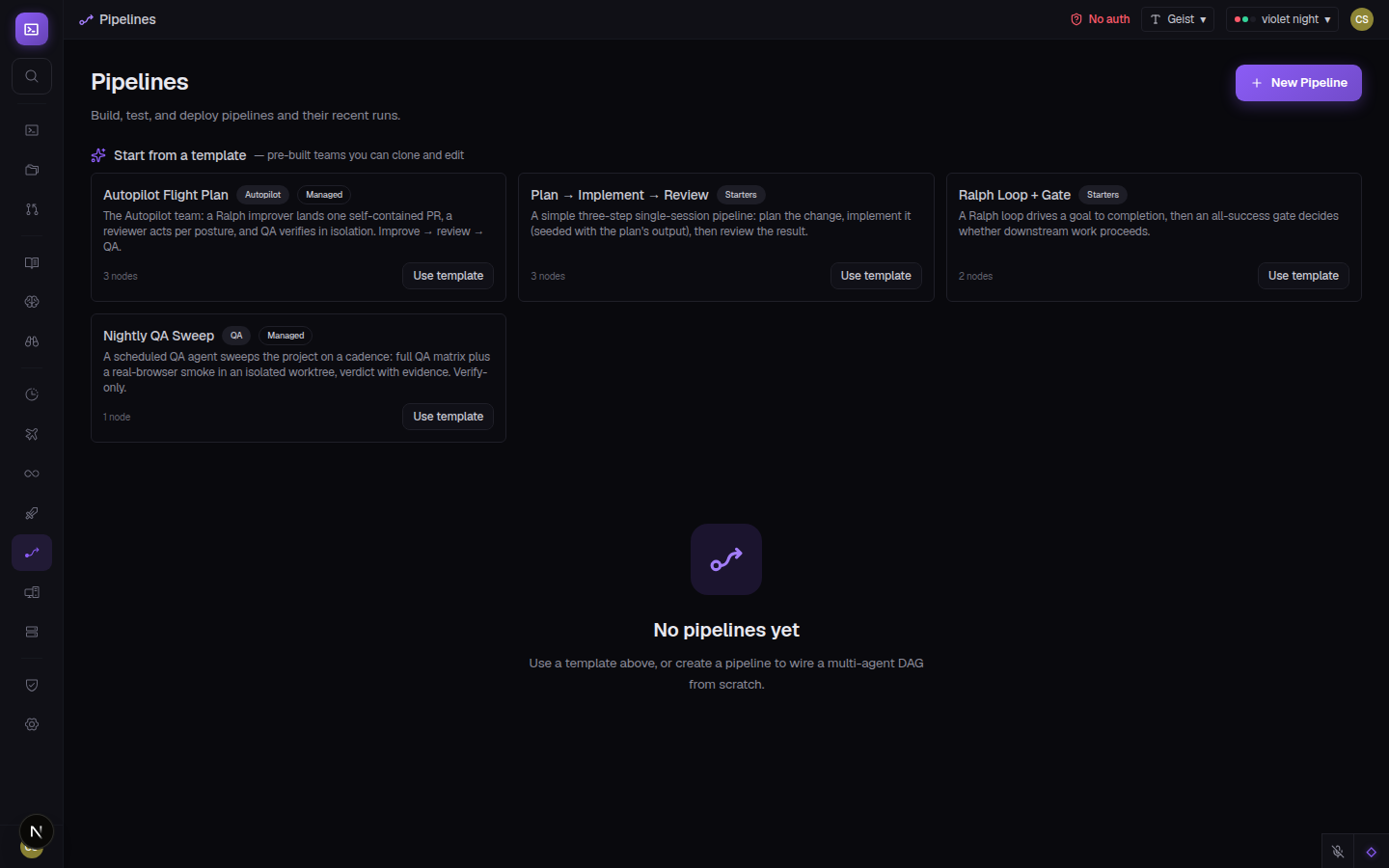
Autopilot's adoption layer generalizes into a managed pipeline template gallery. Pick a template, adopt it into your project with one click, and get a fully wired pipeline — no YAML archaeology required. The builder UI carries forward all the template metadata.
Pipeline loops finally look like loops. Timeline dividers mark each iteration boundary; canvas nodes carry ×N iteration badges; the run viewer shows a per-attempt panel for every node in the loop. Server-side: atomic snapshot writes, edge_taken tracking, and legacy-run flagging make the history auditable at the attempt level — not just the run level.
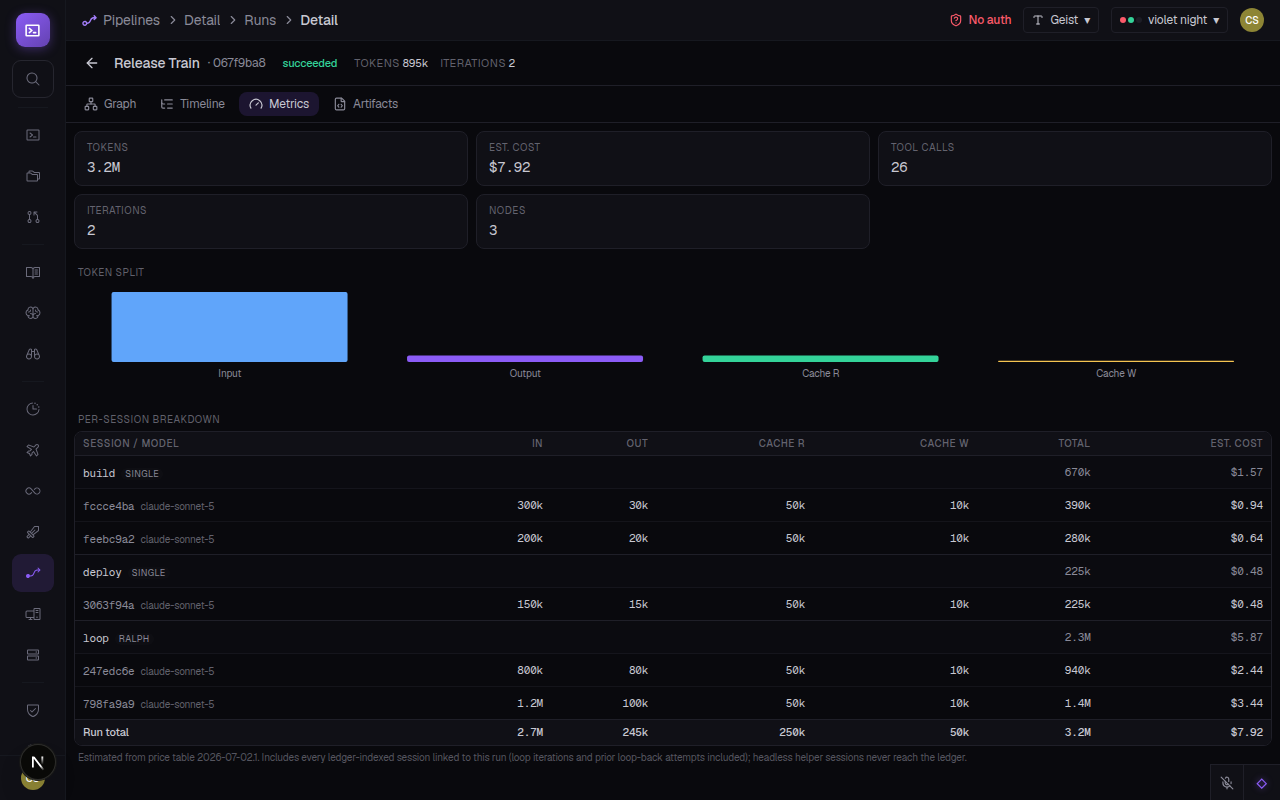
Launch a debug session for any pipeline run and it arrives pre-briefed with the full run dossier — logs, node statuses, token spend, error context. Ask it anything about the run. Alongside: ground-truth token and cost accounting per run, reconciled at the pipeline level, not estimated from session logs.
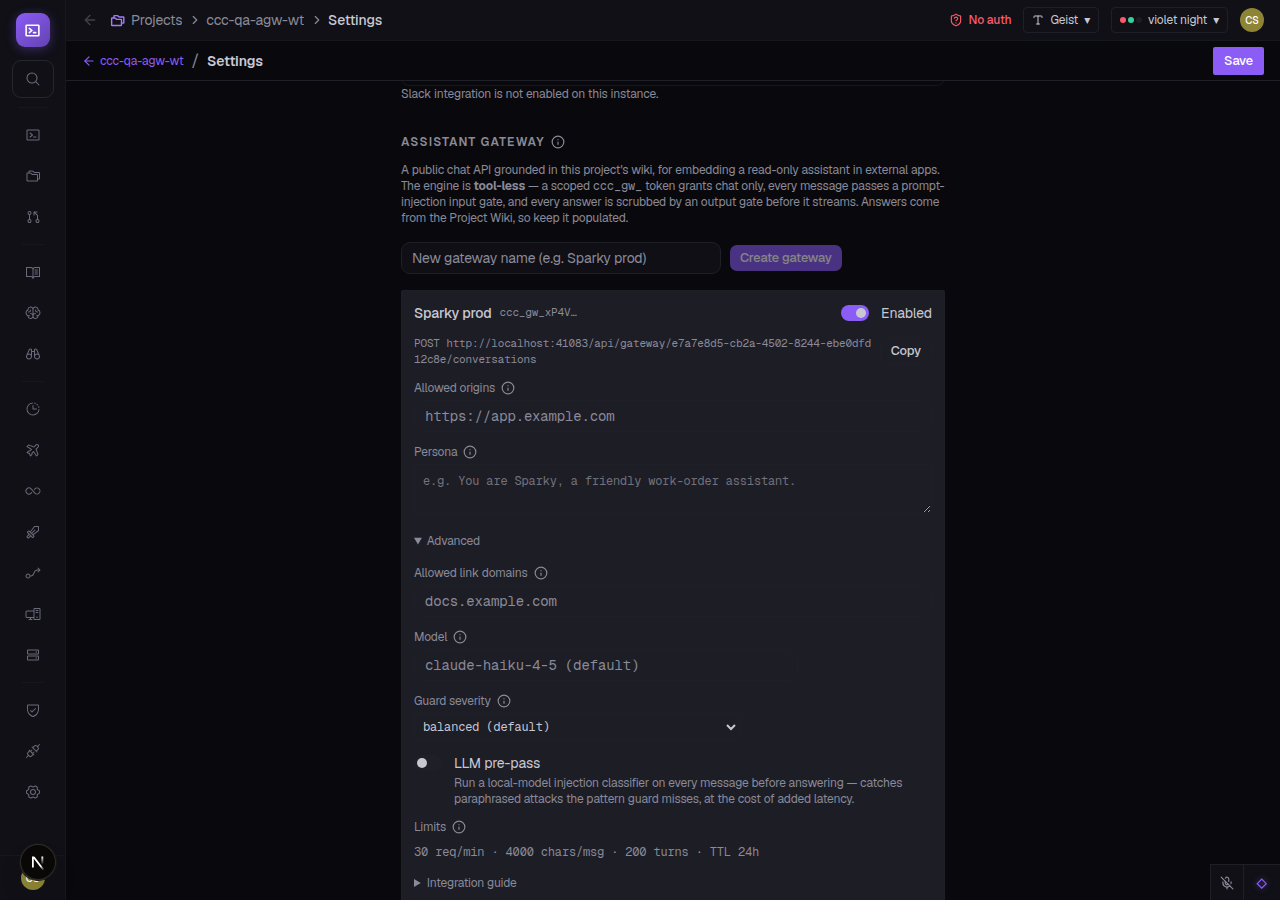
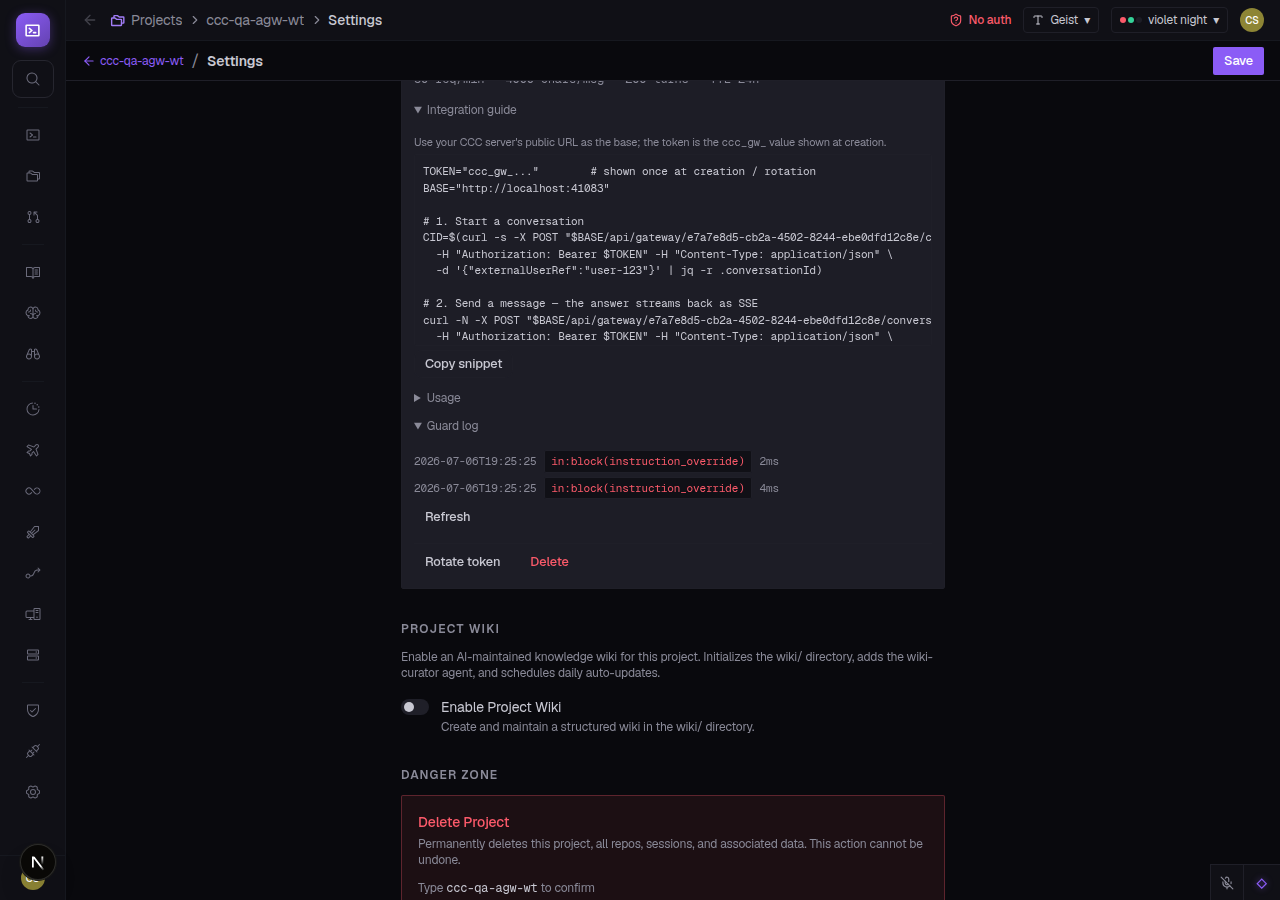
Embed a governed AI assistant in any web app — three API calls: create a conversation, stream a message, read history. Each gateway gets its own token, model, persona, and origin allowlist. An on-demand guard log shows per-request verdicts, severity, and latency. The UX pass adds a guided setup flow, copy-to-clipboard token reveal, InfoTip tooltips, and per-card error handling.
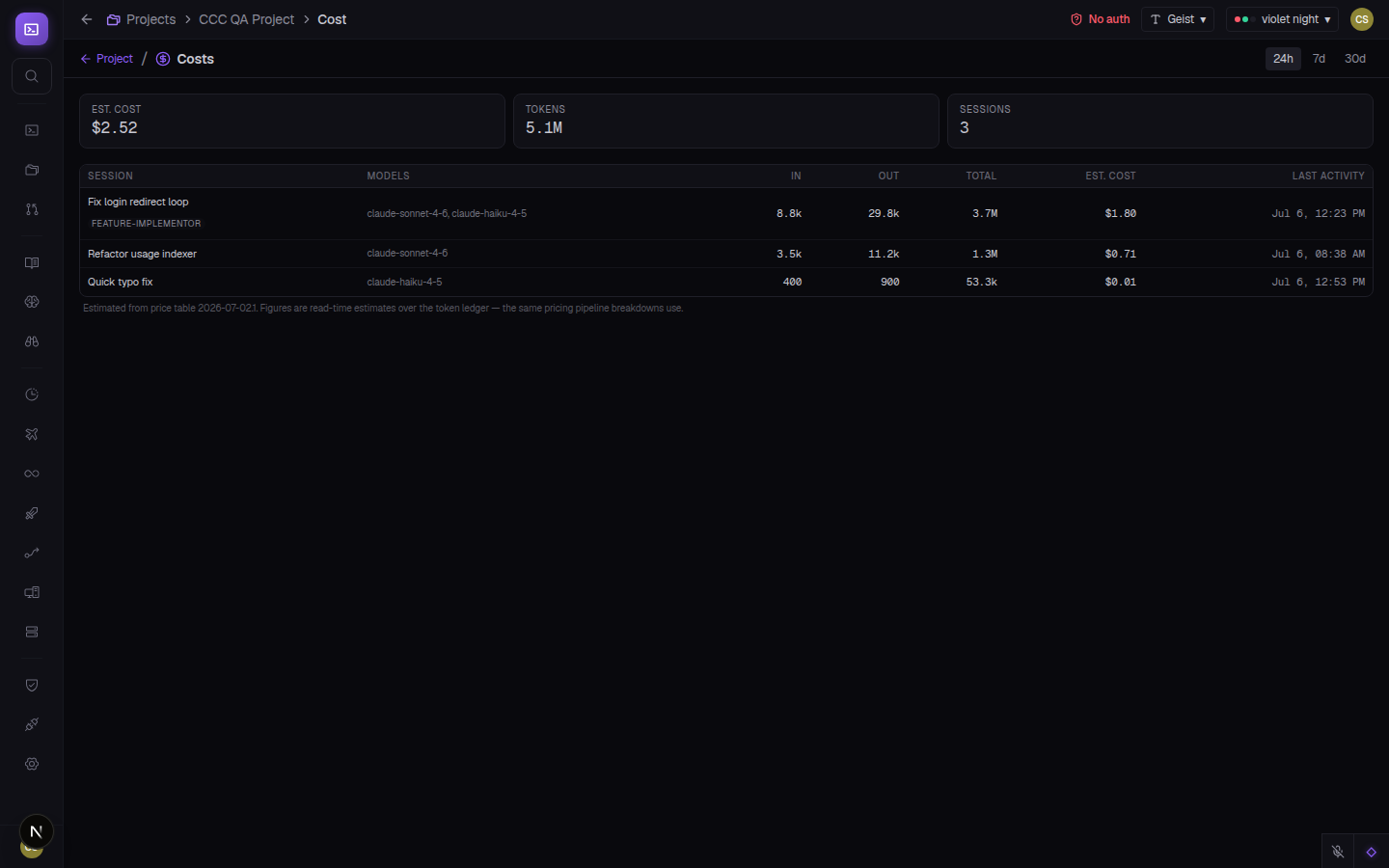
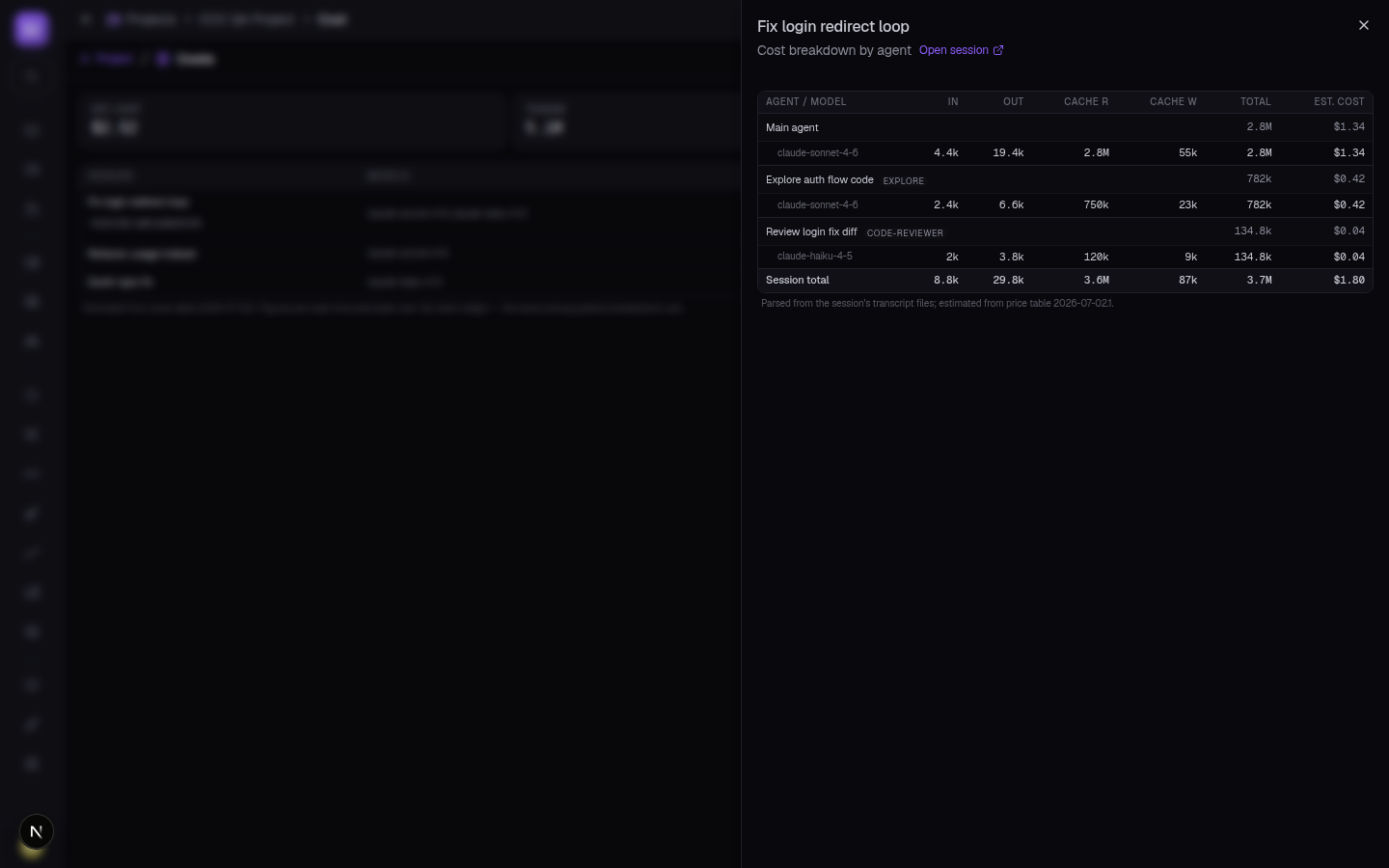
A new cost-breakdown screen shows per-project spend with billed API usage split from subscription plan value. Drill into any session for a per-subagent cost sheet. Pipeline runs get the same treatment — first-pass cost, retry burn, and total reconciled at the run level, not estimated from session logs.
Screens pulled straight from this cycle's pull requests — captured against live, isolated instances.
Pipeline node sessions now render as readable chat — every tool call, permission prompt, and assistant turn laid out in a conversation thread instead of a raw terminal stream. Drop into the raw PTY anytime, or stay in chat and read what the agent actually did.
Discord and Slack now share a single integrations settings page — connect accounts, bind project channels, set access levels, and see connection health in one place. No more hunting across separate settings panels for each platform.


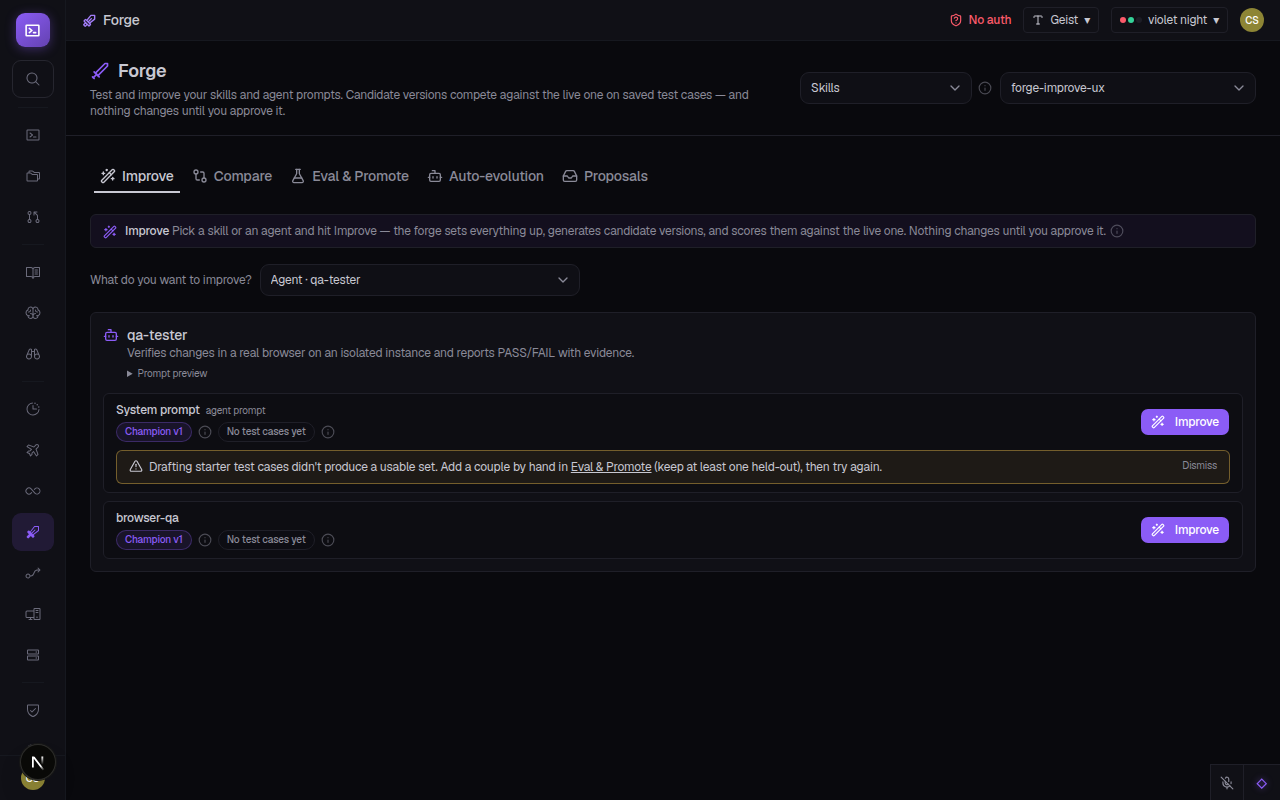
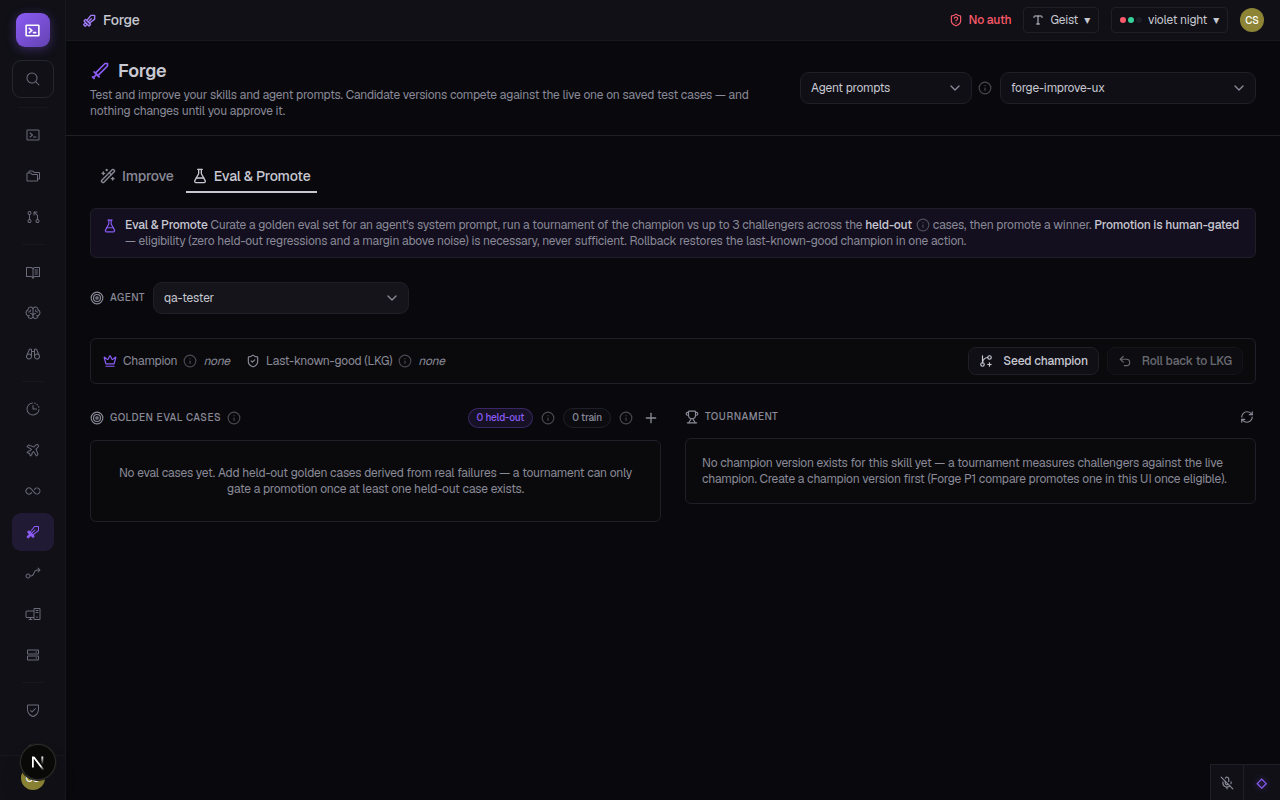
Prompt engineering, automated — one click kicks off a champion-vs-challenger cycle with eval results surfaced inline.
Three API calls. One governed AI assistant — model, persona, token limits, origin allowlist, and a live guard log.
One operator now embeds a governed assistant in their product, runs a chat-first command center from their phone, routes questions through project-aware bots that know your wiki, and watches the token ledger reconcile itself — per project, per session, per pipeline run — in real time.
Fifteen more capabilities that landed quietly this cycle.
A new dual-model mode: Fable plans, Claude Sonnet 5 executes. Fable and Opus are now also the default BigRalph model pair. Claude Sonnet 5 is available as a standalone model across all sessions.
The Intelligence Advisor upgrades to a three-tier synthesis pipeline: session docs at the base, Opus synthesis at the top, yesterday's recap surfaced without friction.
Each pipeline now carries its own Anthropic API key or OAuth token — so multi-team deployments can isolate billing and access without sharing a single org credential.
Full Windows display stack: native display backend, Sandbox isolated display, and service persistence with elevation — computer-use agents can now target Windows machines end to end.
Ralph and BigRalph open a pull request by default when an effort completes — so improvements don't sit in a session, they reach review.
Per-user ccc CLI auth is now backed by the database — tokens persist across restarts, resolve per-session, and no longer depend on env injection.
Project and repo checkouts are pinned to their configured branch — no more sessions drifting to main when a repo has a pinned feature branch.
Forge adds a one-click Improve button, agent_prompt skill kind support for evaluating agent-style prompts, and glossary tooltips for Forge vocabulary inline.
--pipeline flagAutomations create and update now accept --pipeline to wire a pipeline directly from the CCC CLI.
Native Linux installs now support Update & Restart from inside the app — no manual binary swap required.
A consistent Back button lands in the app shell so every deep-linked page has a reliable escape hatch back to the parent view.
Automations now carry an owner and support ownership transfer — runbooks know whose name is on them, and history follows the automation.
Every pipeline run now closes with a structured result summary — outcome, node statuses, and a one-line verdict — written to the run record.
Bare URLs in chat transcripts auto-link — no more copy-paste to open a link Claude dropped in a message.
Users can now set their preferred default session view — chat or terminal — as a persistent account preference, applied on desktop on session open.
Behind the headline launches, the cycle ran a full wave of precision fixes: mobile toggle controls restored to the correct pill shape, mobile chat views stopped binding to the wrong session's transcript, pipeline run watchdogs that finalize wedged runs, automation schedulers that submit prompts without needing a live client to attach, duplicate STT word suppression in voice mode, and branch pinning made opt-in so personal repos stop flipping to main. Solid infrastructure for a fast-moving product.